At first glance, interior doors look much alike. The differences begin within the leaf — and they are what decide silence, stability and long life.
Interior doors may look all but identical, yet their endurance, acoustics and stability depend above all on the construction of the leaf and the core within it.
It is construction — the core and the manner in which the leaf is built — that decides whether a door will be quiet, stable, equal to daily use and sound for many years. At CREADOOR we treat a door as a system, not merely a leaf with a handsome finish.
The core of a door is the internal structure of the leaf, answering for its rigidity, its weight, its acoustics and its resistance to twisting and distortion. It is the core that settles whether, after some years of use, the door will work as it did on the day it was fitted.
The most telling parameter of an interior door is the mass of the leaf and the construction of the core — they answer for acoustics, for resistance to distortion, and for the comfort of use. The heavier the leaf, the better the acoustics, the greater the stability, and the more solid the feel in opening.
Typical mass of a 90/200 cm leaf, according to construction:
| Honeycomb | 10–15 kg |
| Tubular chipboard | 18–25 kg |
| MDF board | 25–35 kg |
| Timber construction | 30–45 kg |
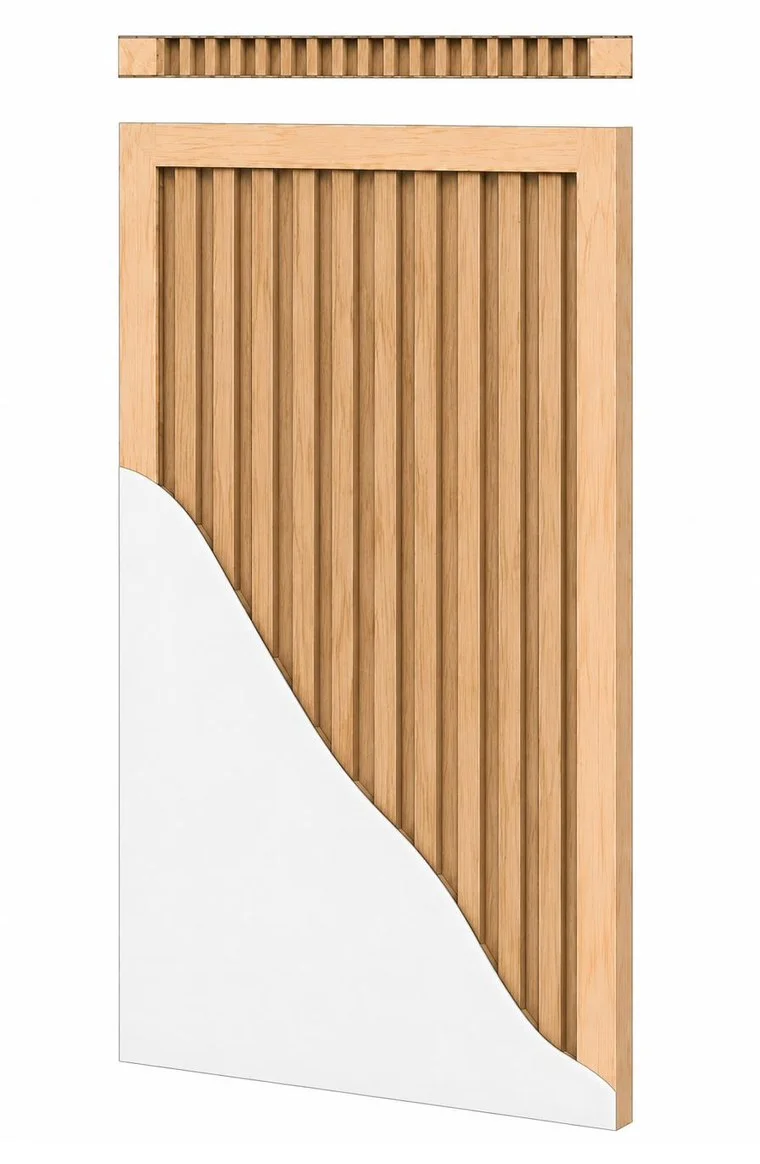
A full timber leaf — the heaviest and the most stable. It is used chiefly in premium projects, where silence and soundness across decades are what count.
The highest performance — the choice for premium interiors.
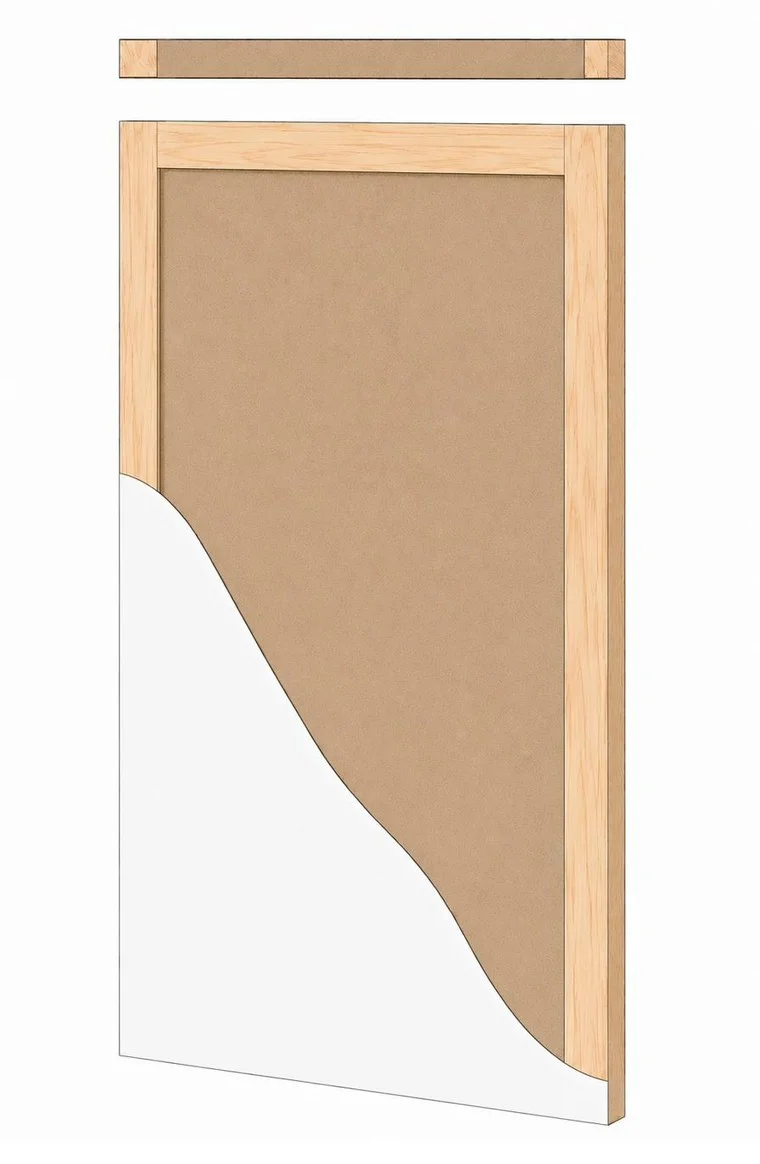
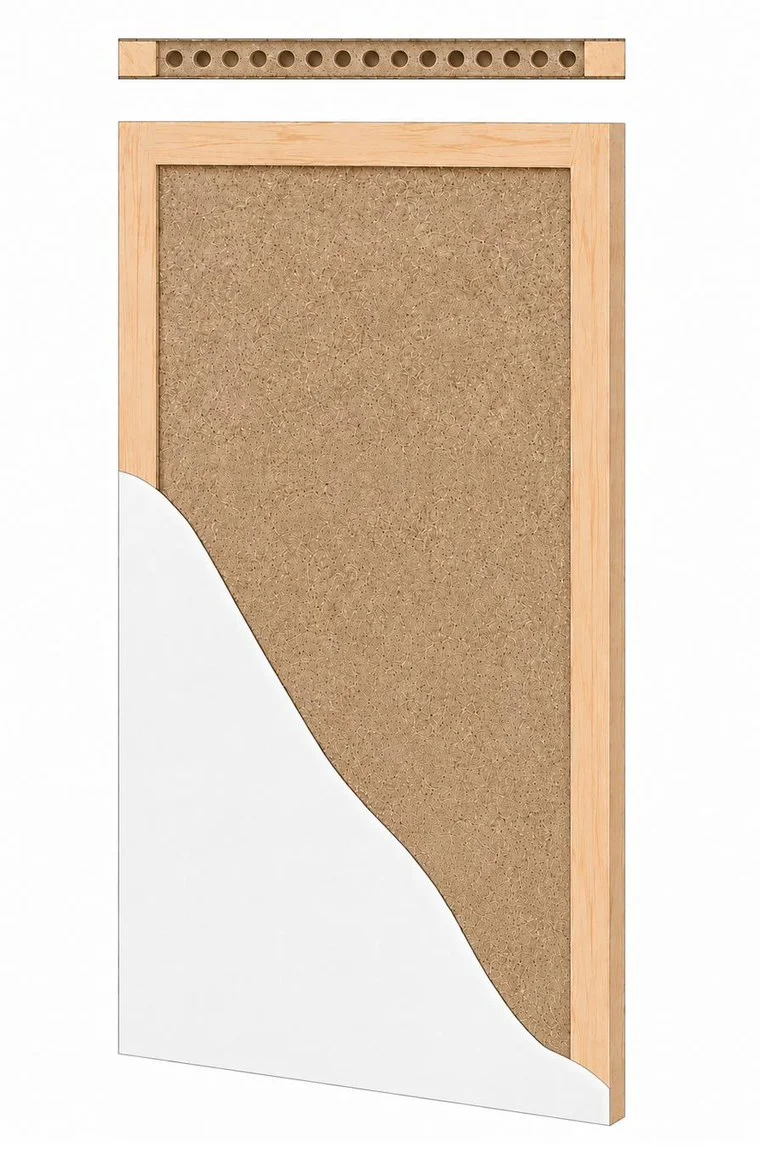
A rigid timber frame with a board core within. It is the kind of core that decides the character of these doors: a heavier MDF board raises mass and improves acoustics; a lighter tubular chipboard lowers weight and price. The timber frame gives, meanwhile, a stability no wholly board-built leaf has.
A compromise between quality, design and price.
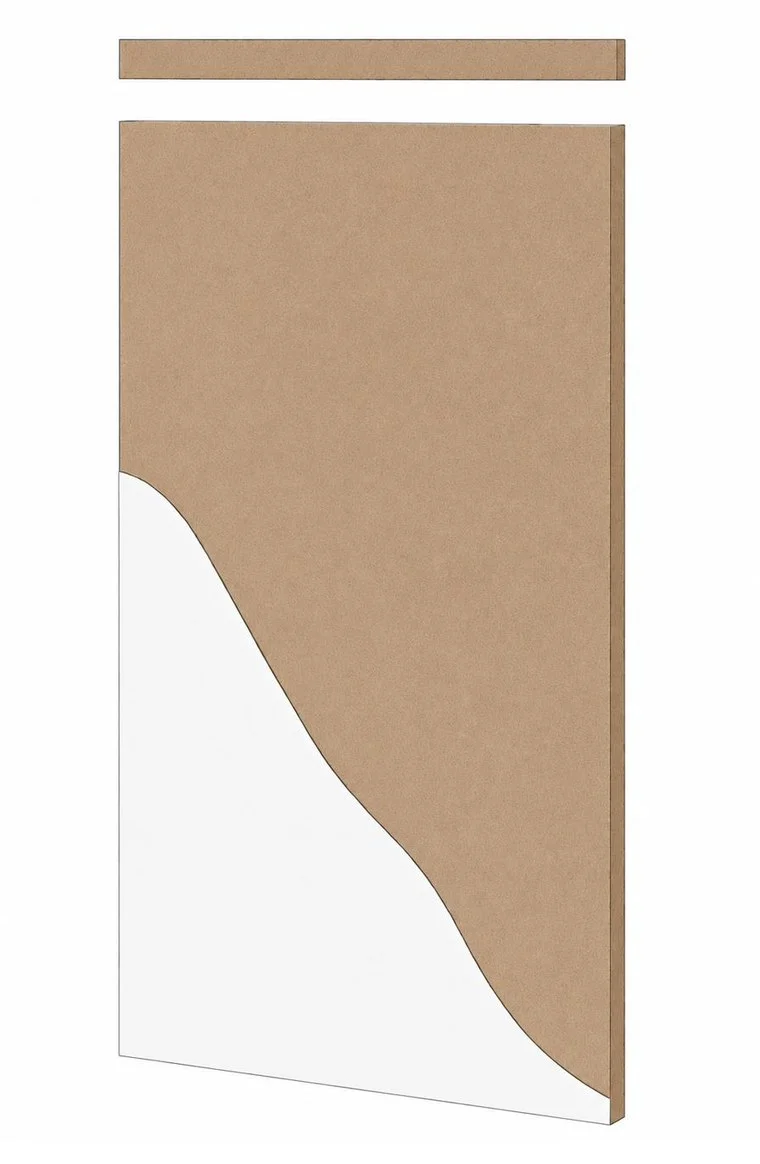
A leaf built entirely of MDF, with no timber frame. A cheaper and widely available solution, used where price rather than maximum stability comes first.
An economical solution where price matters most.
A timber frame with a card honeycomb structure within. The lightest and cheapest solution, intended for ancillary rooms where acoustics and resilience are not a priority.
An economical solution, chiefly for ancillary rooms.
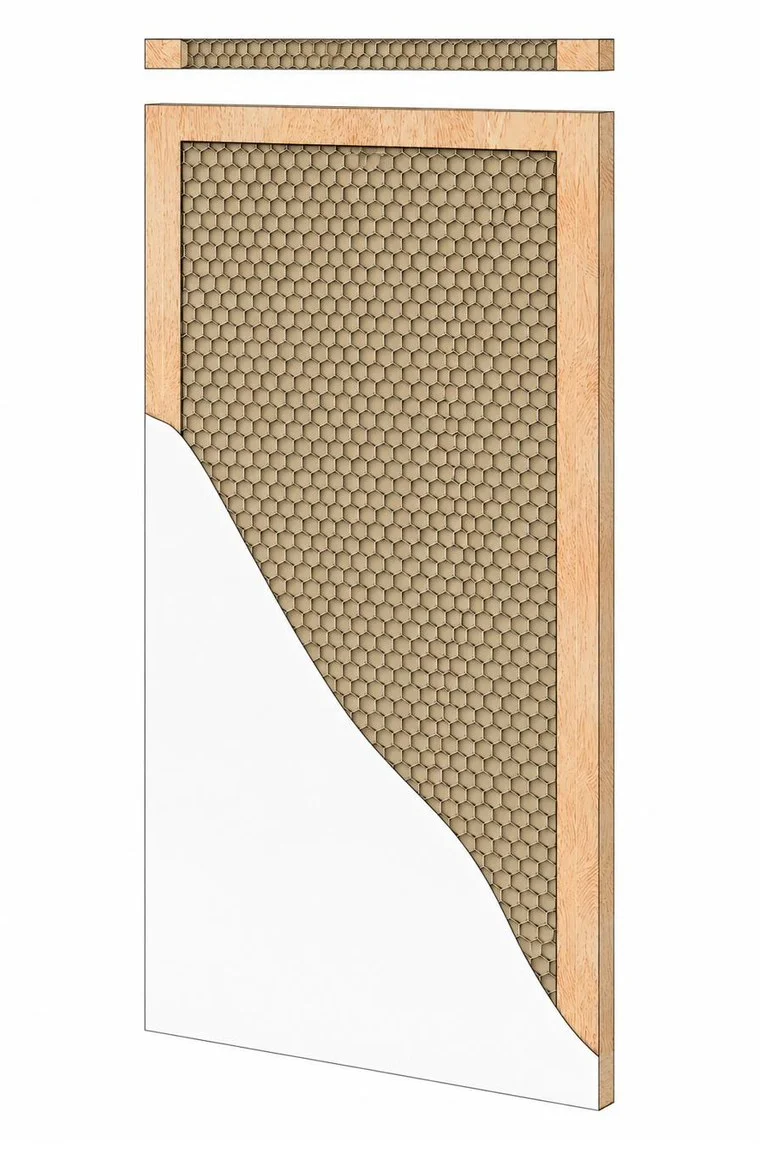
Not every room needs the heaviest leaf. The key is to match construction to function — where silence matters, reach for timber; where a door is only a screen, a lighter core will do.
Clients looking for premium doors ask less and less often whether it is timber, and more and more often how the door will behave in five or ten years. And it is here that Creadoor construction makes the difference. The timber structure gives mass, soundness and acoustic insulation; the outer layer of MDF gives a perfect surface for lacquer and for a modern detail. This is not a compromise: it is a deliberate choice of technology that unites endurance with beauty.
Where silence and concentration matter — timber construction, or MDF with a heavy core.
A principal room — timber construction or premium MDF, for a solid feel and good acoustics.
Ancillary rooms — tubular board or honeycomb will amply serve.
The greatest endurance is offered by timber doors and by doors with a heavy, solid board core.
Yes, provided the internal construction of the leaf is right.
No, but they are intended chiefly for ancillary rooms, where acoustics and resilience are not a priority.
In a premium door, comfort does not come from appearance. It comes from mass, from structural stability and from the quality of the making. What cannot be seen decides how the door will work through the coming decades.
Further parts of the Creadoor compendium
Veneer, lacquer, laminate — character, resilience, restoration.
Read the article →When a wall becomes architecture — one continuous plane.
Read the article →The rebate, the rebateless leaf, the concealed frame and reversible doors.
Read the article →Send plans, photographs, or simply the idea. We will reply as soon as we have studied it.