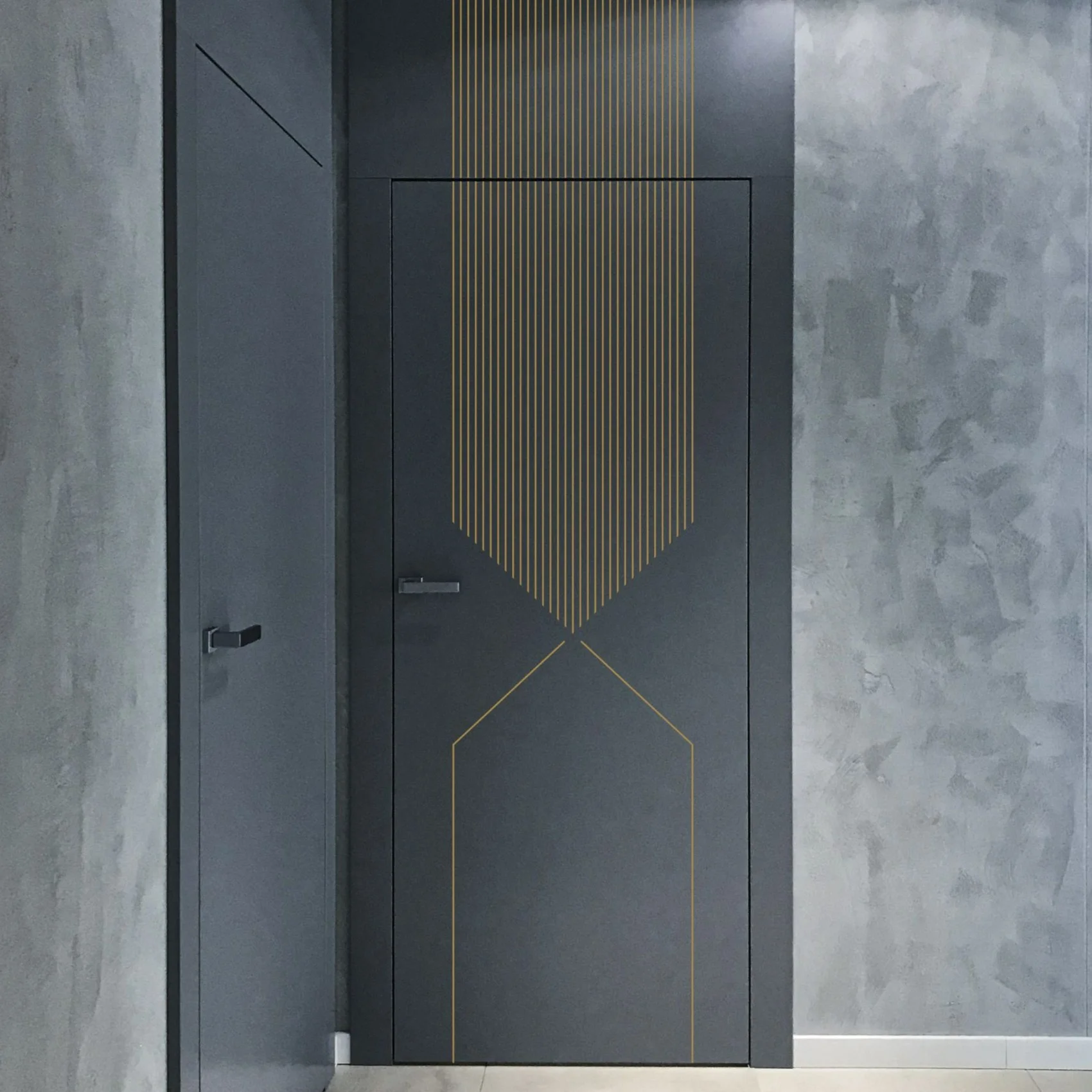
Element is the collection in which the pattern rises above the face of the leaf and begins to sculpt the light. It is built of raised applications with a thickness of their own and chamfered edges — a form seen at an angle and felt beneath the hand.
The door ceases to be a passage. It becomes a sculpture that sets the character of a whole interior.
The elements are its inspiration. Aqua — water: fluency, calm, and pure, undisturbed form. Ignis — fire: movement and visual depth that kindles a space. These are only the first two Elements; the next are already in hand.
The construction of the leaf remains wholly of timber — stile, rail and ribbing in laminated timber, as in every door we make. The application is a separate, precisely profiled element, lacquered together with the leaf.
The same technology, two temperaments. One settles an interior; the other kindles it.
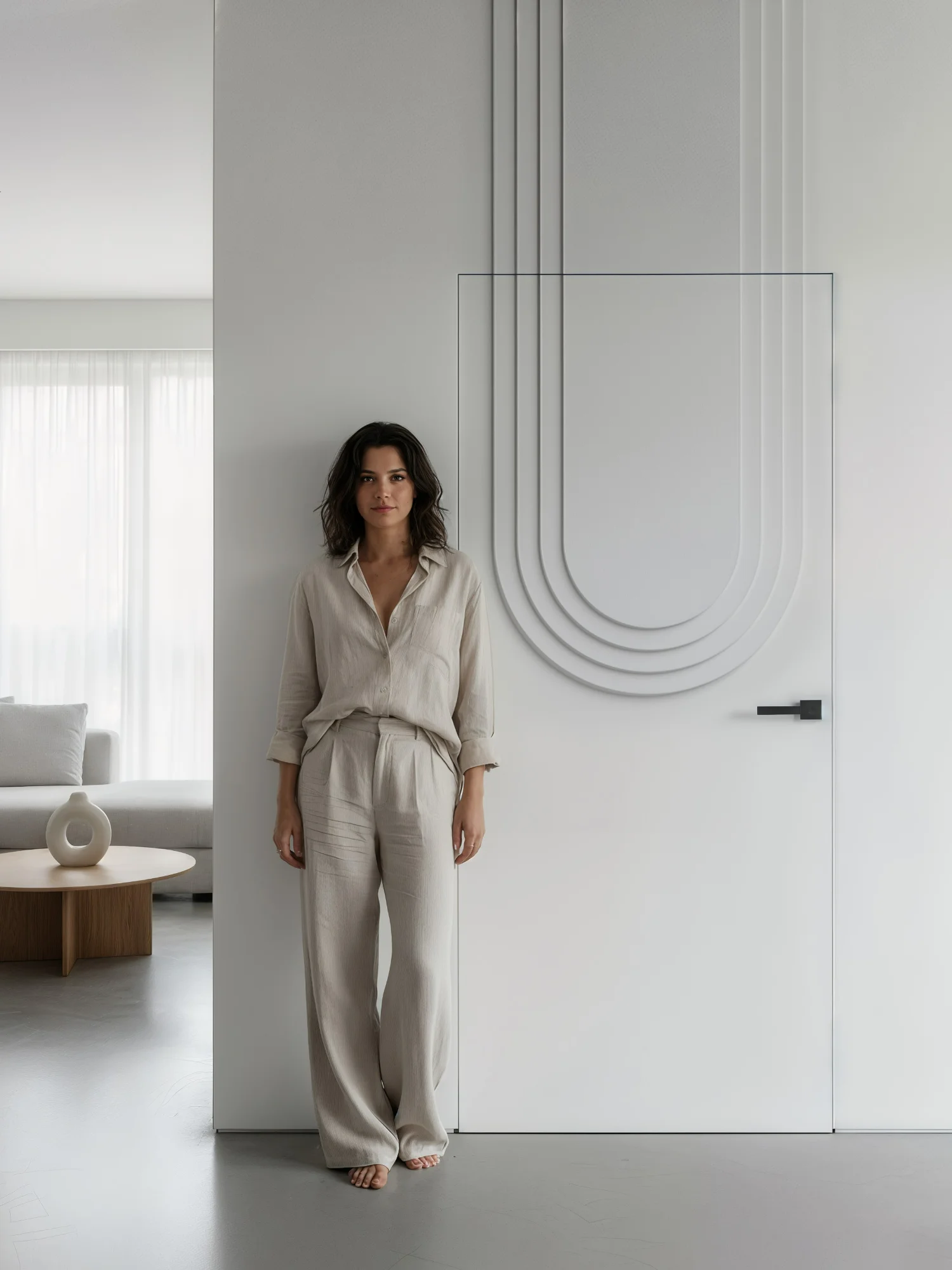
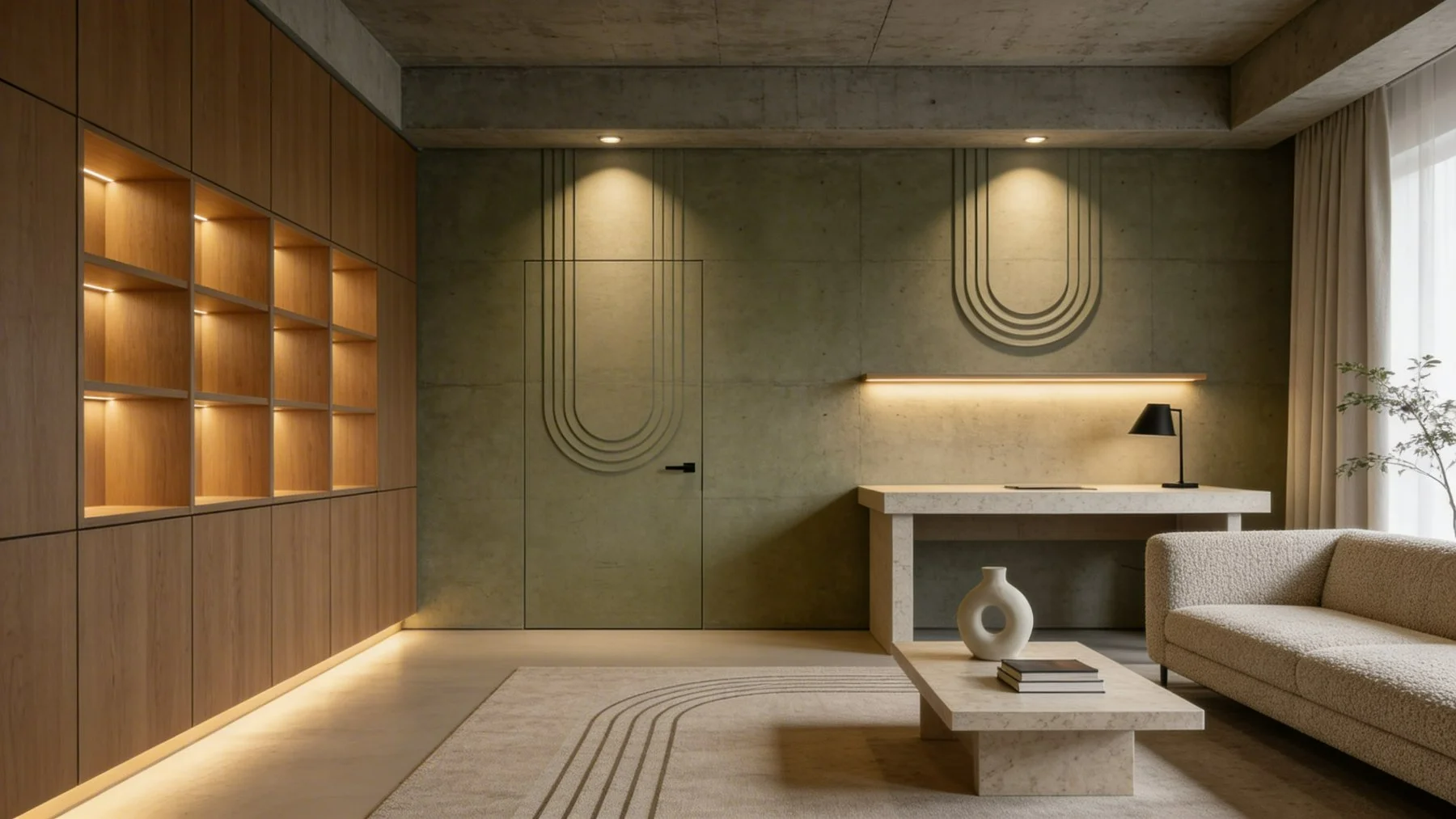
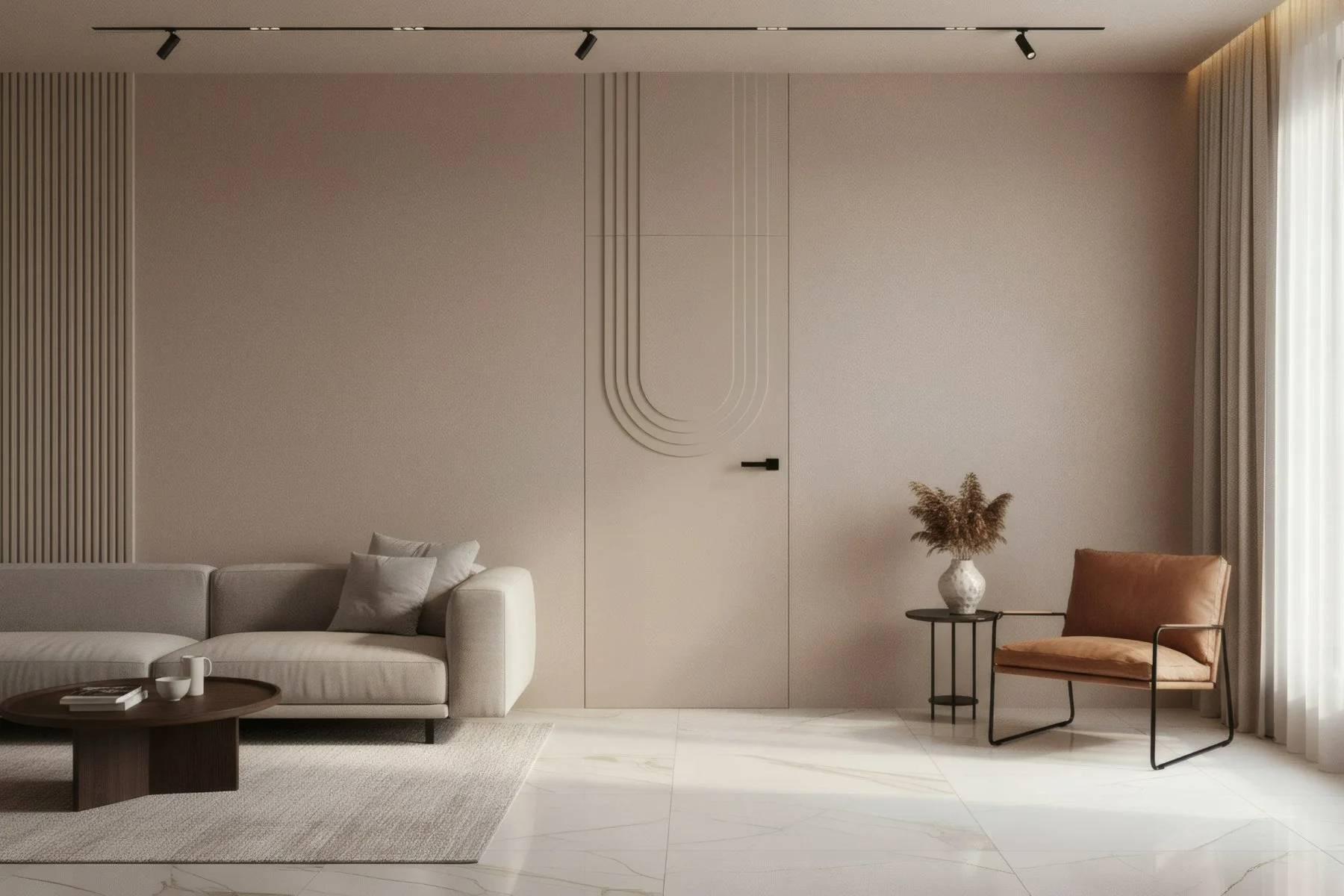
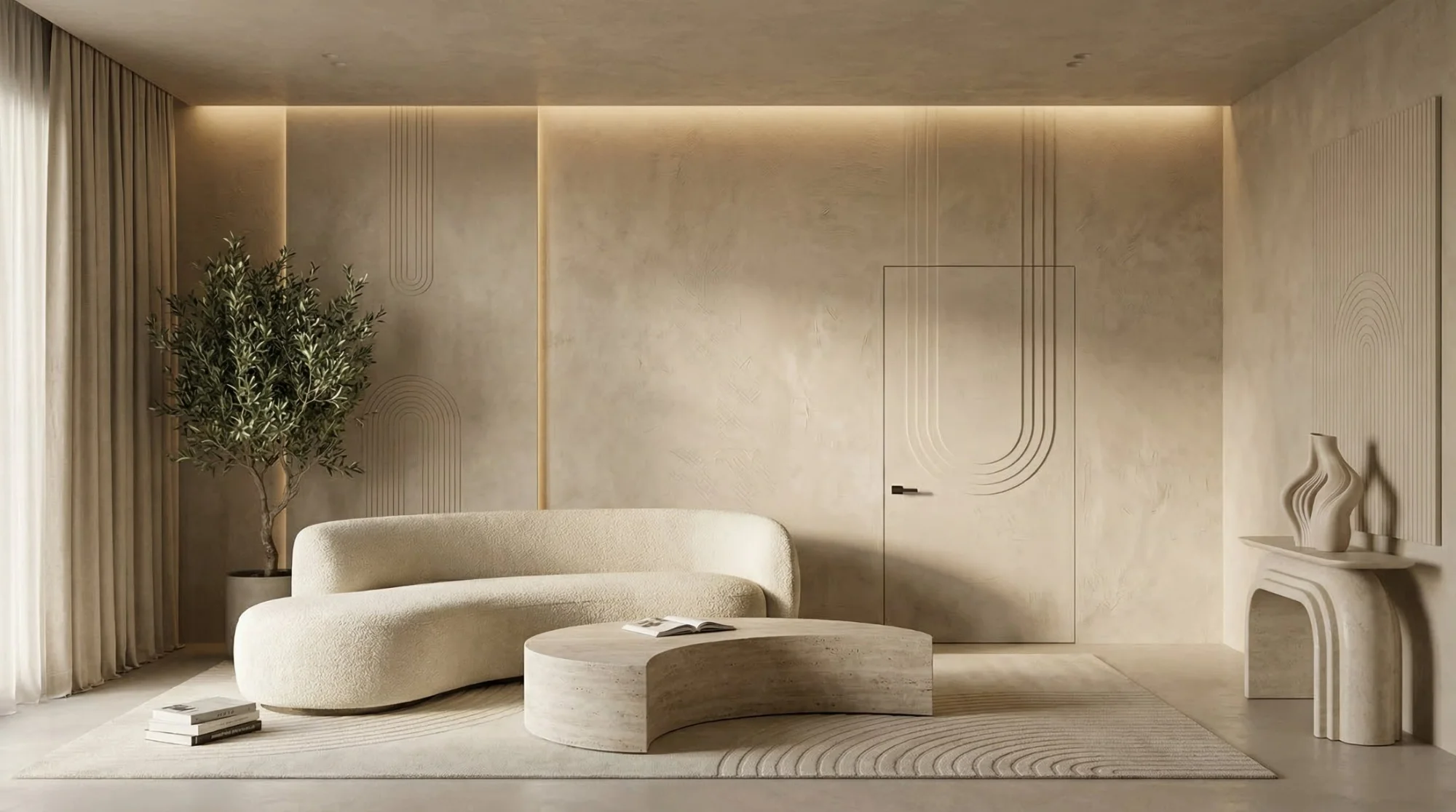
A flowing arc leads the eye from the ceiling towards the handle. A soft, organic form — calm, and a pure, undisturbed line.
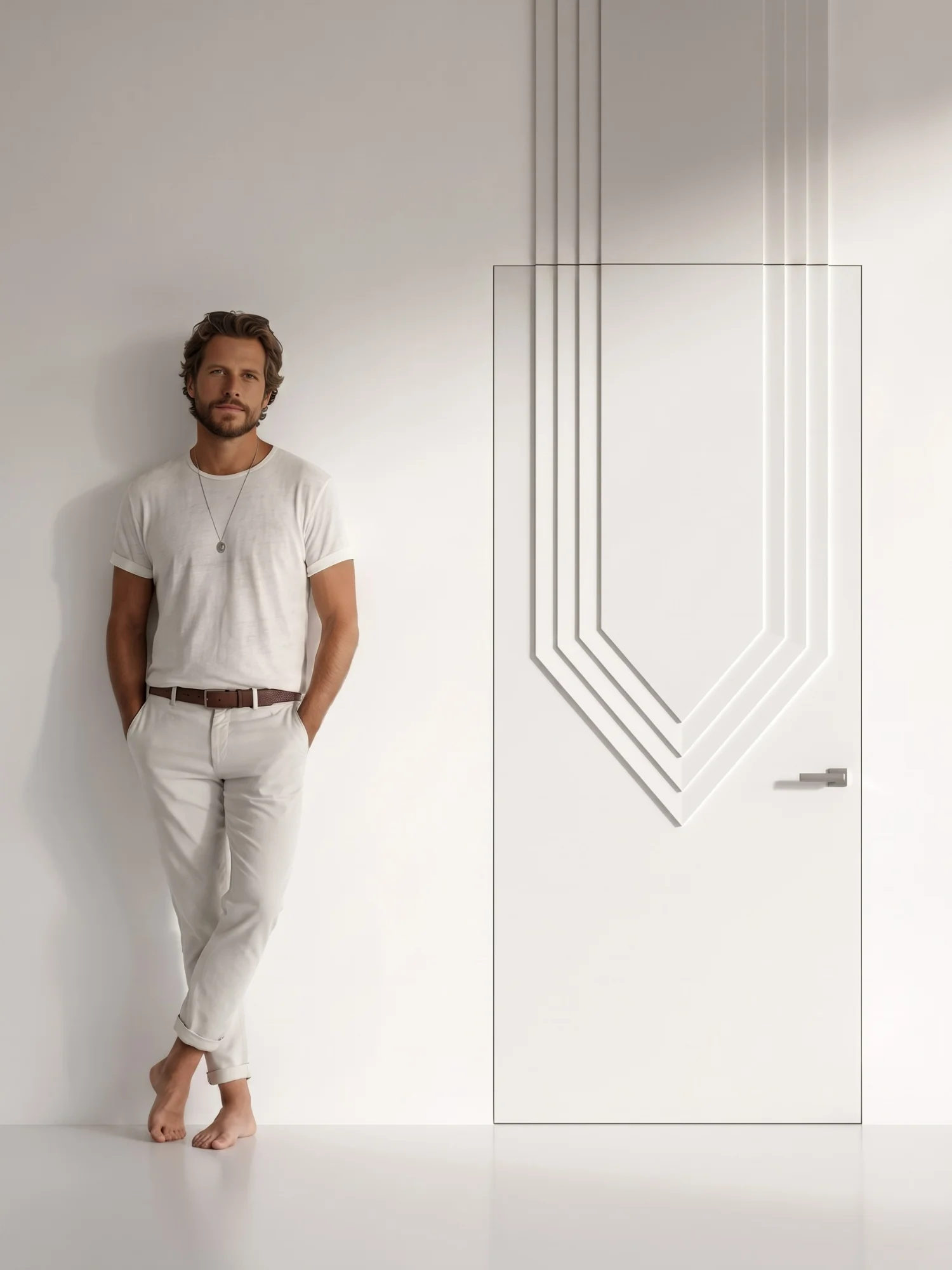
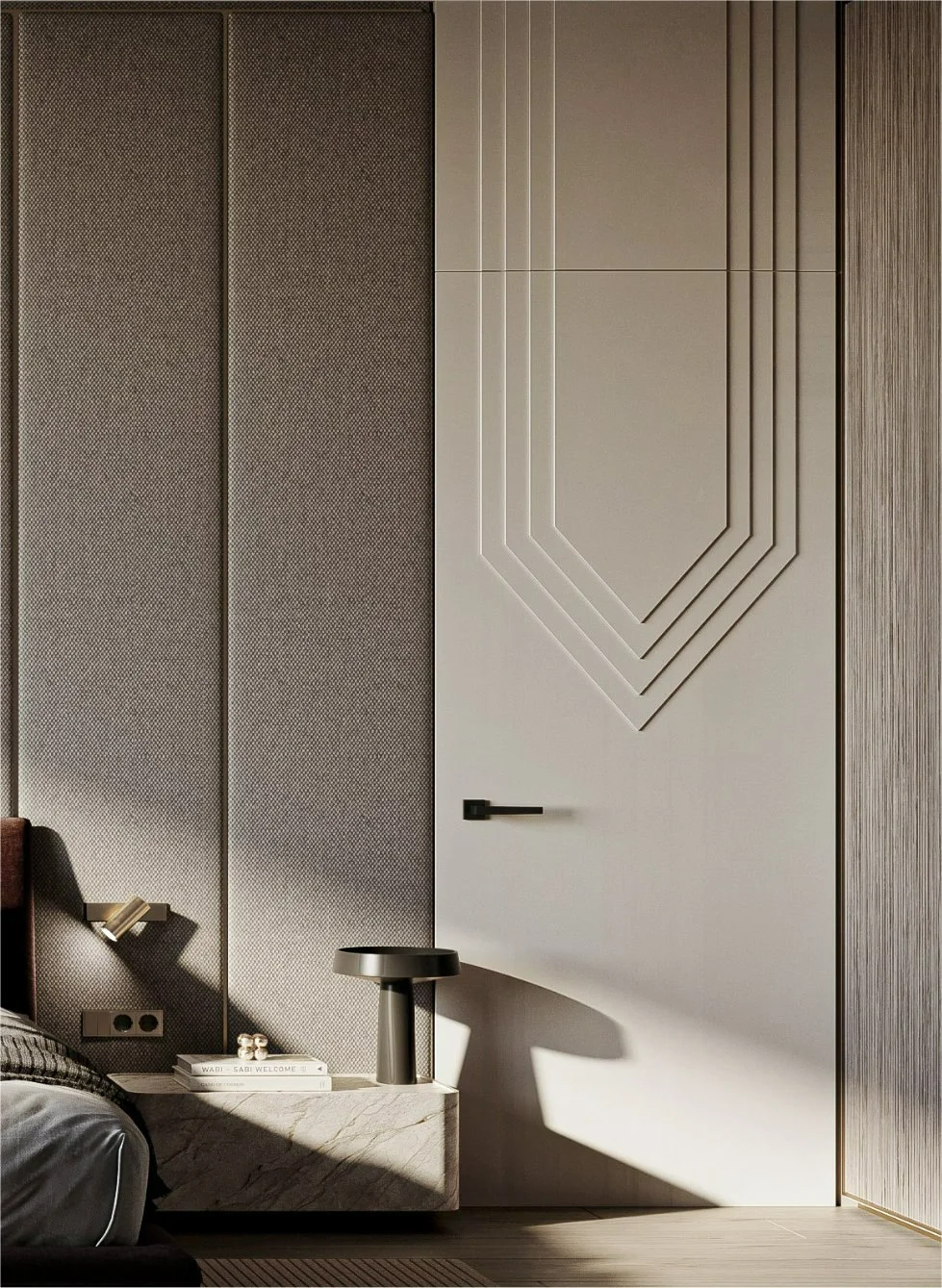
Sharply converging lines and a clear direction. Geometry of strong character — movement, and the depth of shadow.
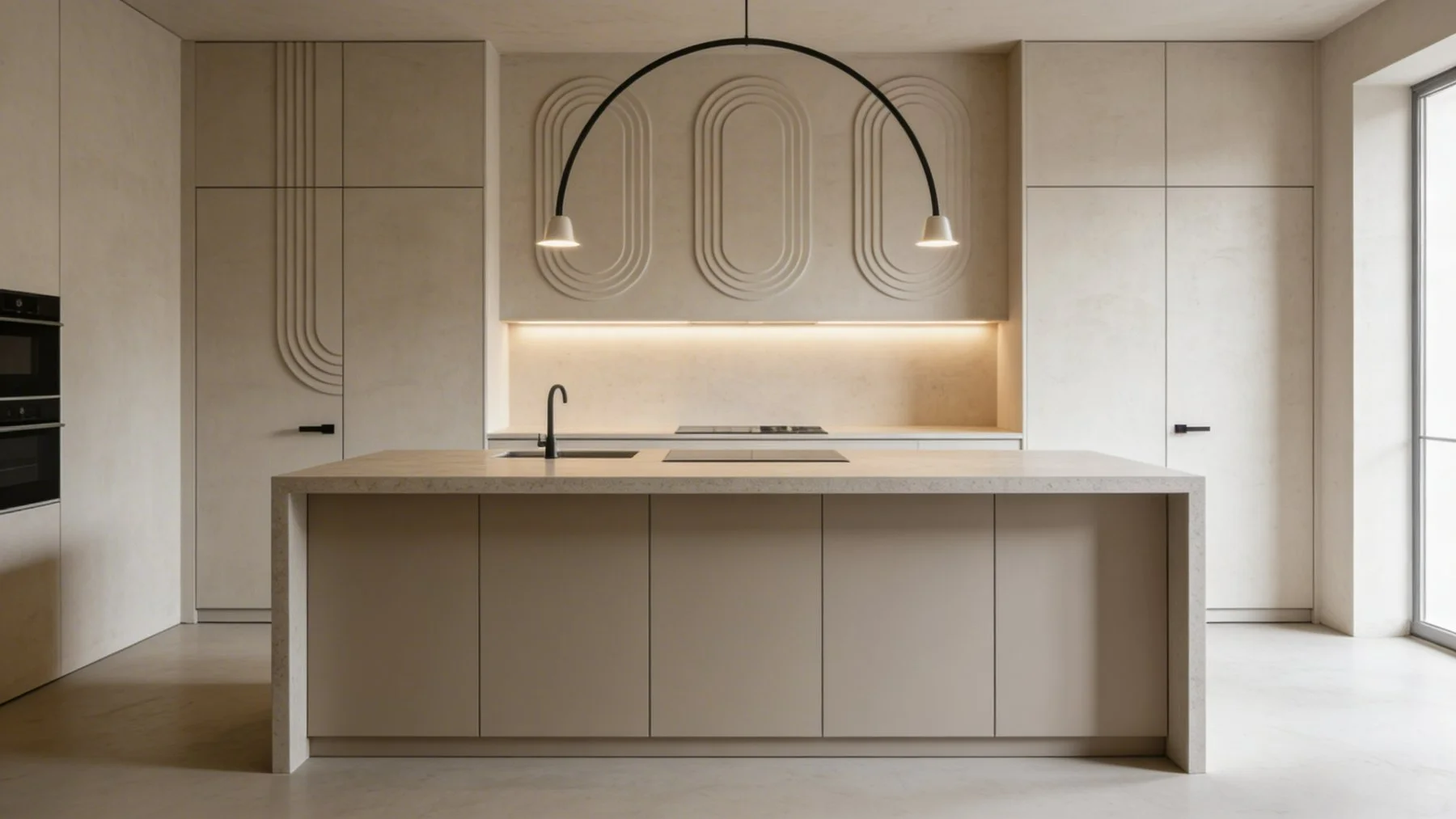
The pattern does not end at the edge of the door. We continue it on the plane of the wall above the leaf, so the composition reads as one form — and the opening ceases to be visible.
The applications have a thickness of their own and chamfered edges — it is they that build the shadow, which shifts with the hour.
The same motif is carried above the door and onto the adjoining wall, by which the composition reads as one form.
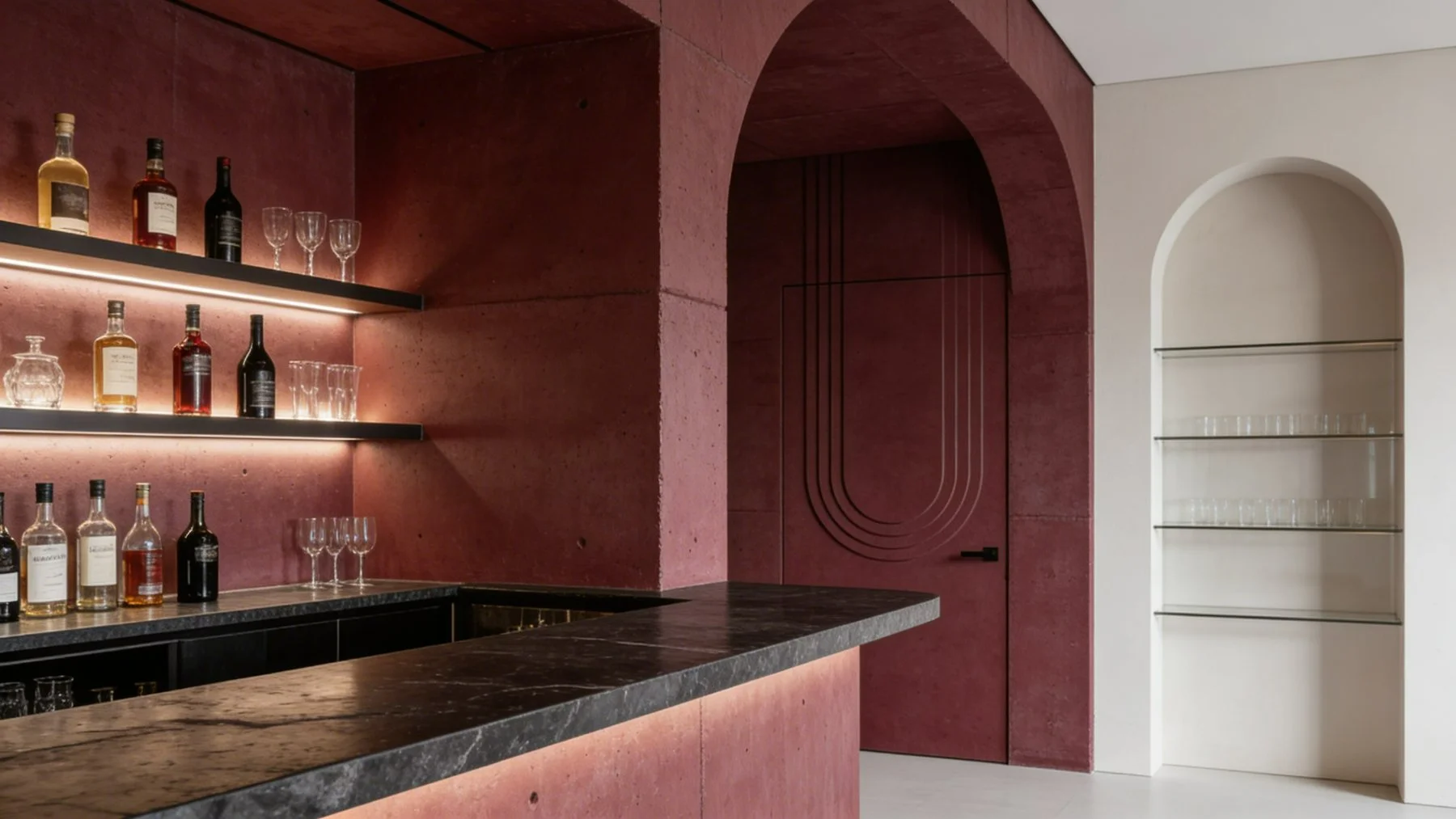
Application and leaf are lacquered together, in the same colour — the pattern reveals itself tone on tone, not by contrast.
Element is most often drawn in a concealed frame with concealed hinges — nothing interrupts the drawing of the form.
The composition is one, but its character changes with the colour of the wall and the light — from a quiet white to a deep red.
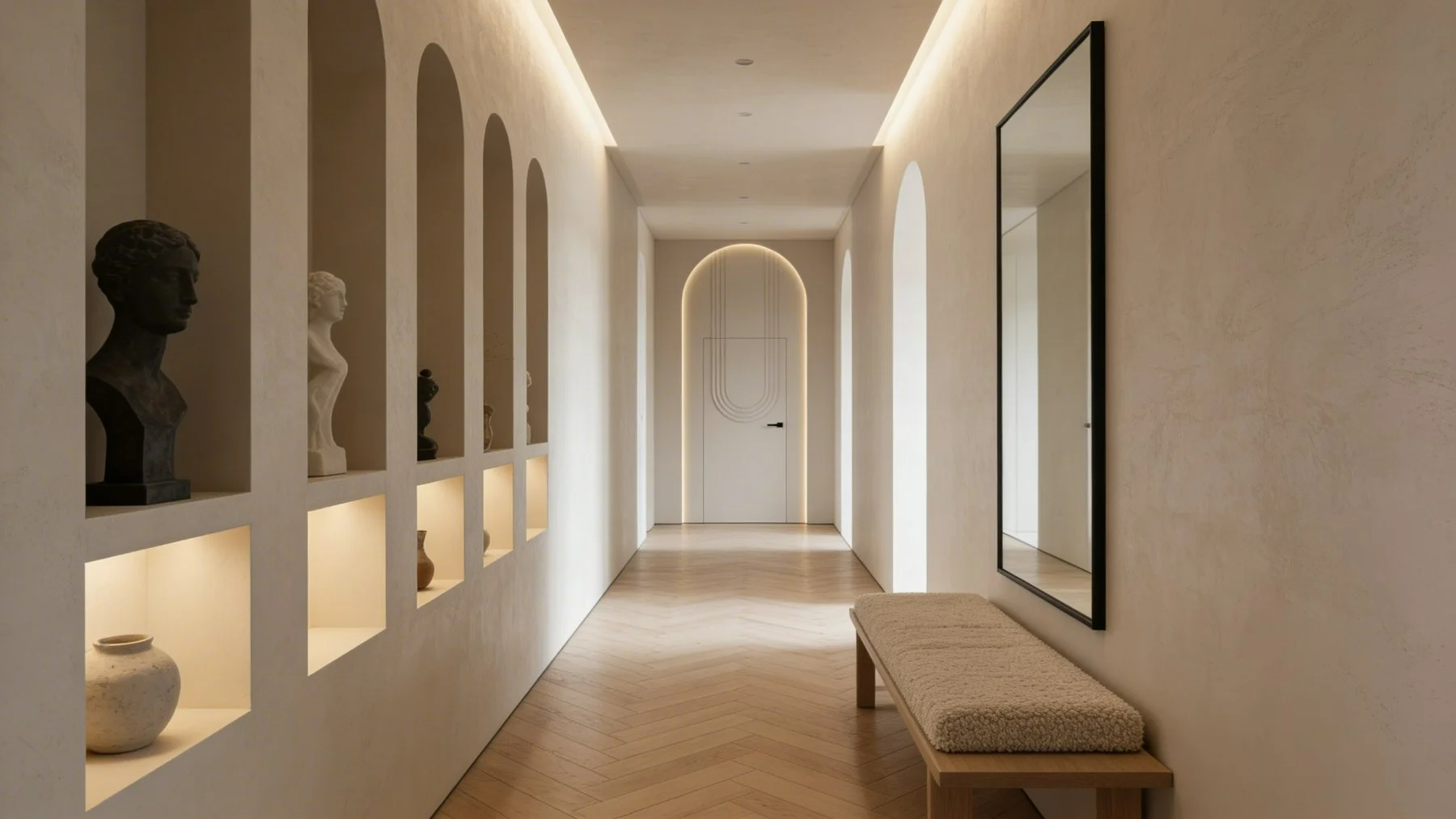
Send plans or photographs of the wall. We will say how to lead the form, and where to stop it.