One simple rule that settles every doubt — and governs the ergonomics, the comfort and the look of a whole interior.
Choosing doors for a well-made interior is a matter not only of beauty but of precision. One of the essential decisions in placing an order is the direction in which the leaf opens — a detail that bears on ergonomics, on comfort, and on the final appearance of the scheme.
Handing decides whether you avoid leaves colliding, whether you reach the light switch comfortably, and whether you make full use of the room. Before the finer points, let us master the basis — the rule that dispels every doubt.
It is the only thing you need remember. Place yourself before the door on the side from which the leaf opens towards you — where you can see the hinges. Then simply see which hand they are on:
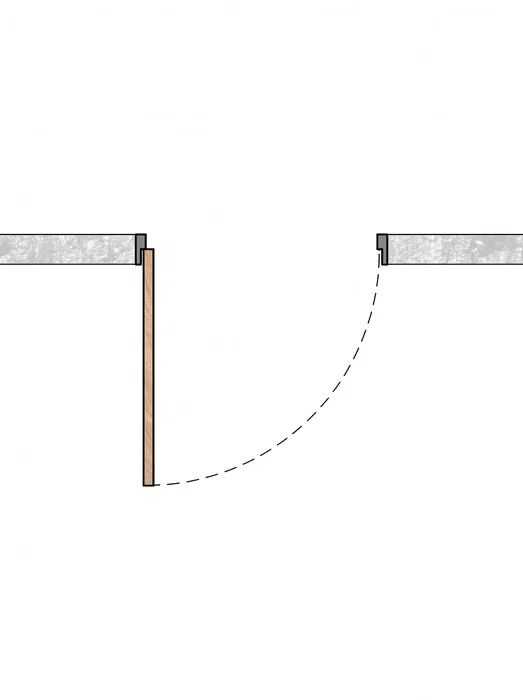
Hinges on your left . Opening it, you lead the leaf to the left.
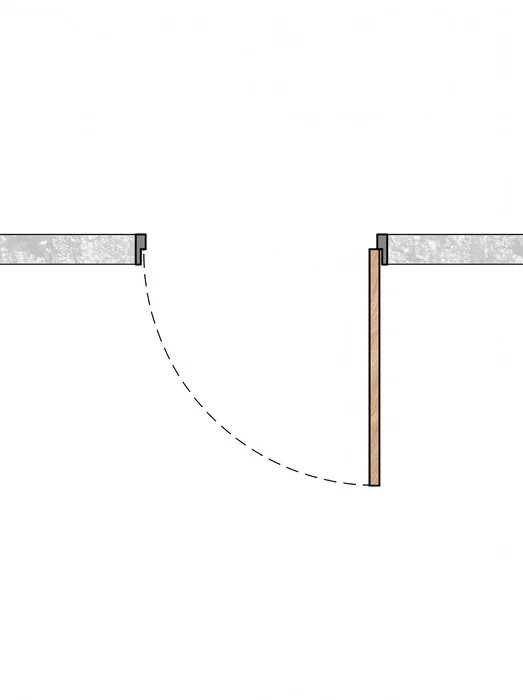
Hinges on your right . Opening it, you lead the leaf to the right.
The direction of opening is best decided at design stage, not at installation. Handing chosen well guards against three familiar problems: leaves colliding in a hallway, a door masking the light switch, and a leaf that opens the awkward way and eats into the room.
A simple design rule: the leaf should open against a wall, not into the middle of the room, and once open the handle should stand on the side you most often enter from. The light switch is usually set on the handle side — which is why door handing and switch position are one decision, taken together.
Where minimalism and an unbroken plane come first, the reversible system enters — also called an inward-opening door. It allows the door to open into the room while the leaf stays flush with the wall on the outer side.
From without — from a hallway, say — you have a smooth surface, undisturbed by the line of a frame or by the leaf set back. From within the room, the door opens inward. This allows one to bring the leaves of every door flush from the same side, whichever way they open — the detail that decides the coherence of a whole composition.
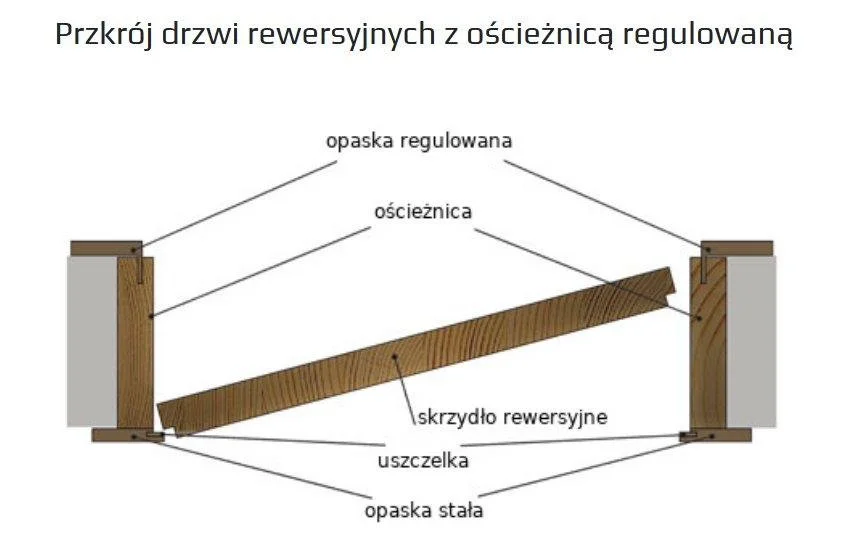
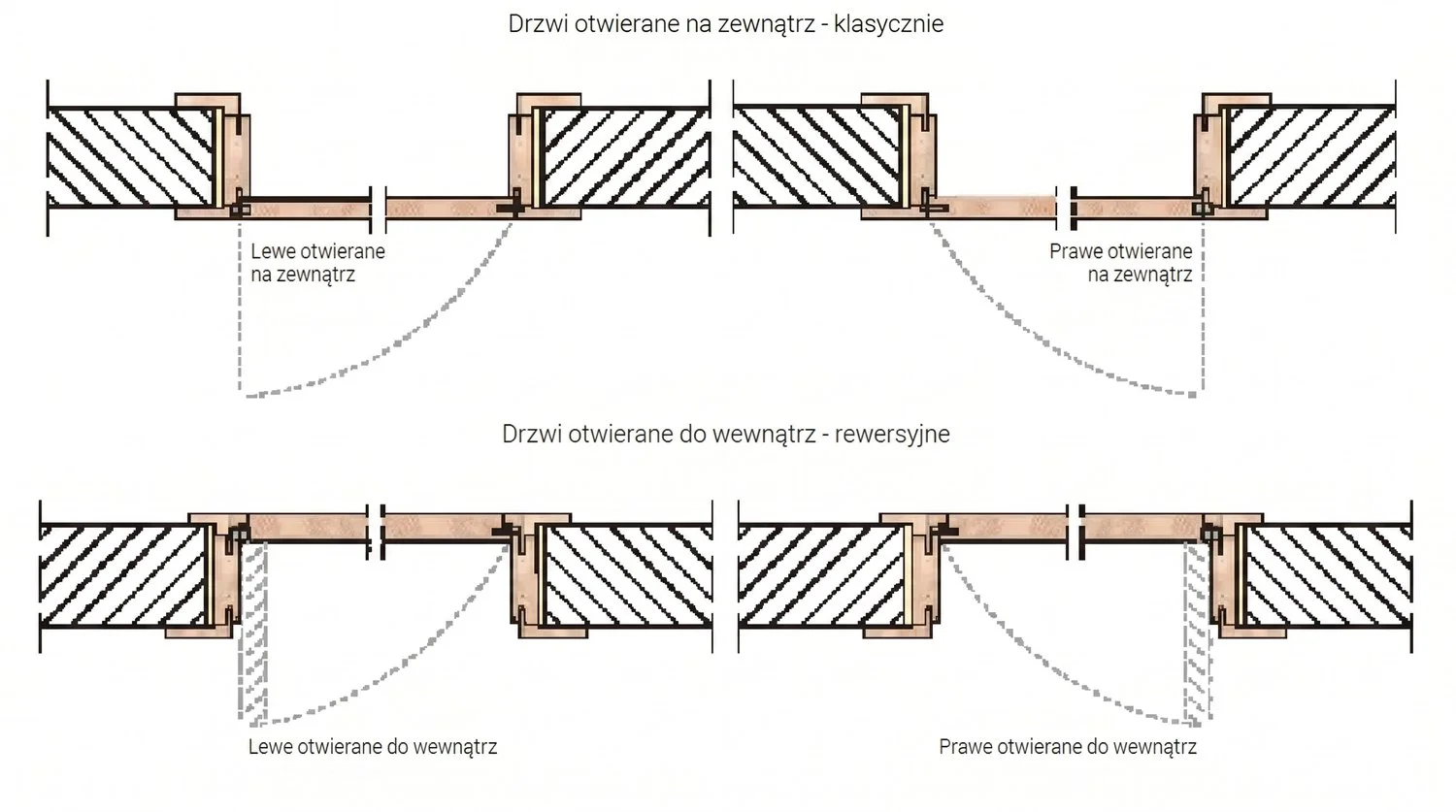
There is one nuance we state plainly: a reversible door, because it closes “through” the frame, does not close as softly and smoothly as one that opens outward. It is a deliberate trade between a perfect face and the character of the leaf's action — and worth knowing when choosing this system.
The bedroom door opens inward and the bathroom door outward, and yet the whole veneered wall sits on one plane. That was exactly the point — and only now do I see how much it changes.
The rule is simple: stand where the door opens towards you, and see which side the hinges are on. The rest — the manner of opening, and the choice between the conventional and the reverse — are design decisions best taken at the beginning. The solid timber construction of a CREADOOR door is ready for any of them.
Further parts of the Creadoor compendium
What cannot be seen — and what decides silence and long life.
Read the article →Veneer, lacquer, laminate — character, resilience, restoration.
Read the article →When a wall becomes architecture — one continuous plane.
Read the article →Send plans, photographs, or simply the idea. We will reply as soon as we have studied it.