The finish is the first part of a door we see and touch. It decides character, resilience, the way the material ages and whether it can be restored — which is why, in a premium door, it is treated as part of the architecture, not as decoration.
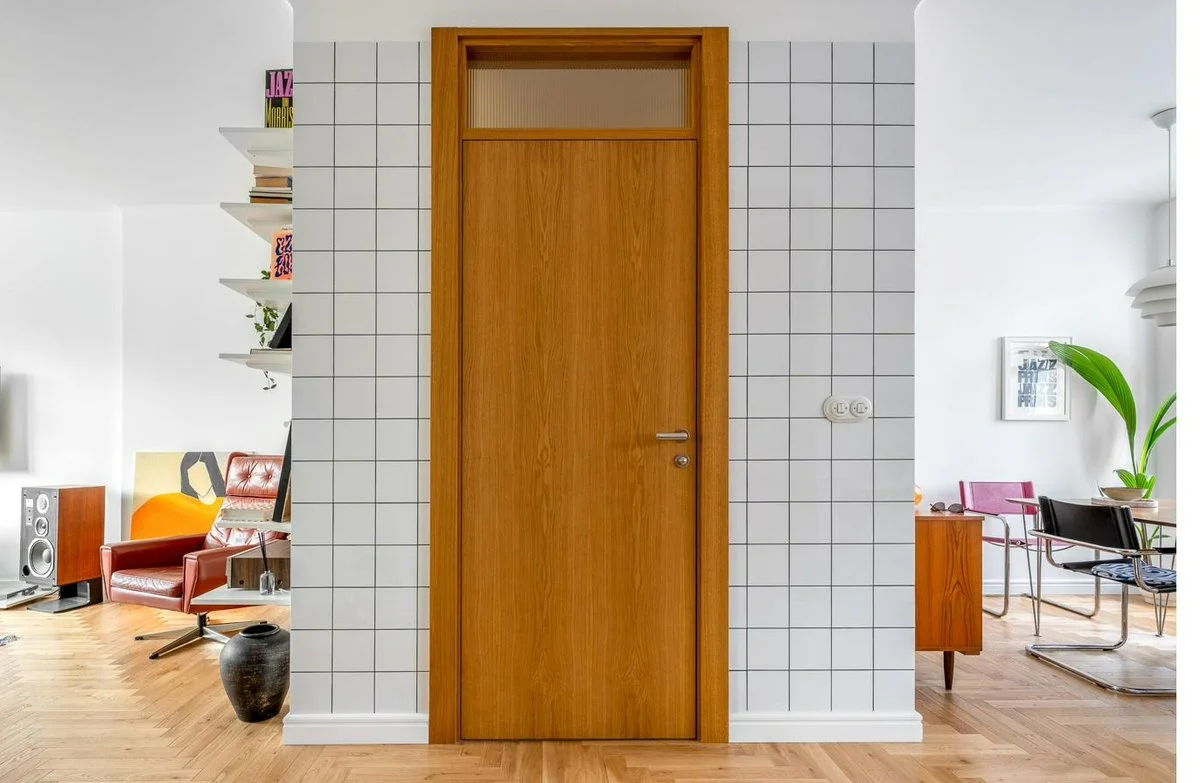
The character of a door is made not by its construction but by what shows on the surface. The finish decides the visual impression, the resilience to daily use, the way the material ages, and whether the door can be renewed in time.
There is no single best finish — there is the finish right for a given interior, style and intensity of use. Below we go through the most common solutions, from the most natural to the most resilient, and on to the approach in which the door disappears, becoming part of the wall.
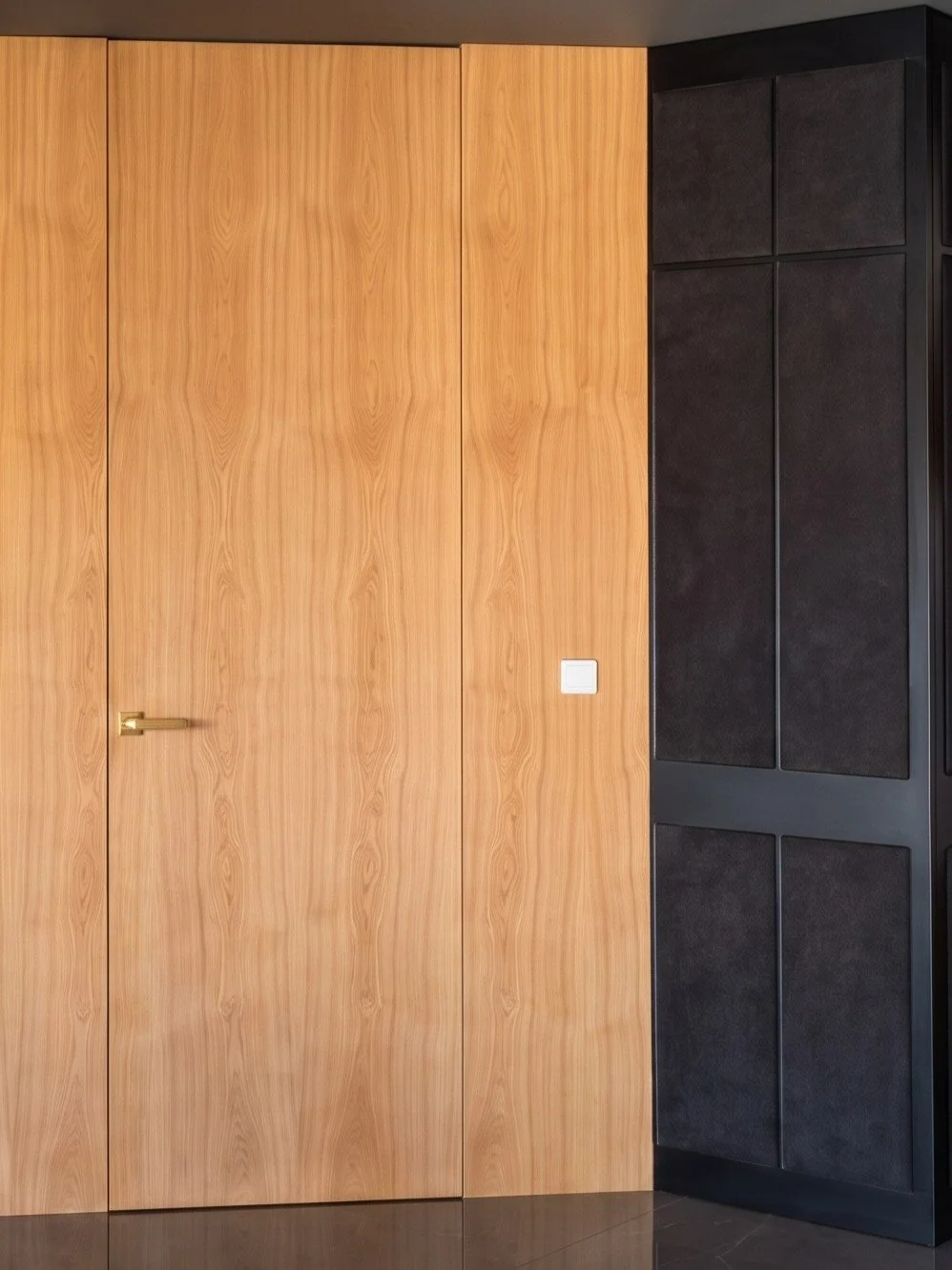
A thin layer of real timber bonded to the face of the leaf. Every grain is different, so the door gains a figure that cannot be repeated — authentic, and of standing.
One of the most elegant finishes — a constant of premium interiors.
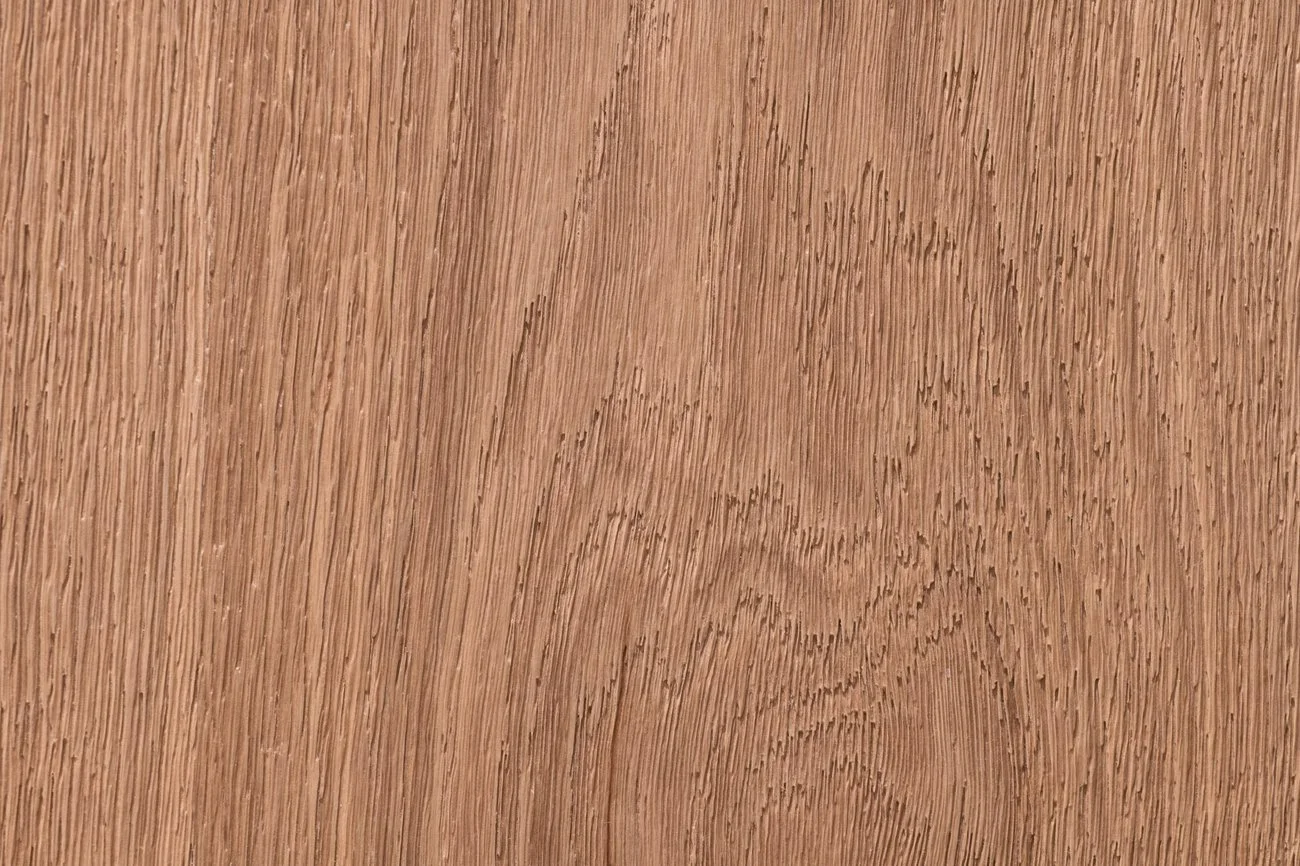
Made from timber worked by technical process, by which it gains a consistent, predictable structure. Where natural veneer can be capricious, the engineered kind gives coherence.
It is the finish for projects with many veneered surfaces. Natural veneer is supplied in bundles of between a dozen and at most a few dozen square metres, and a perfect match of tone between bundles is sometimes impossible — on larger projects the colour of individual elements can differ. Engineered veneer resolves this: it is available in quantity in one consistent colour, which allows many elements and large-scale joinery to be made without fear of inconsistency.
A good solution where the visual coherence of many elements matters.
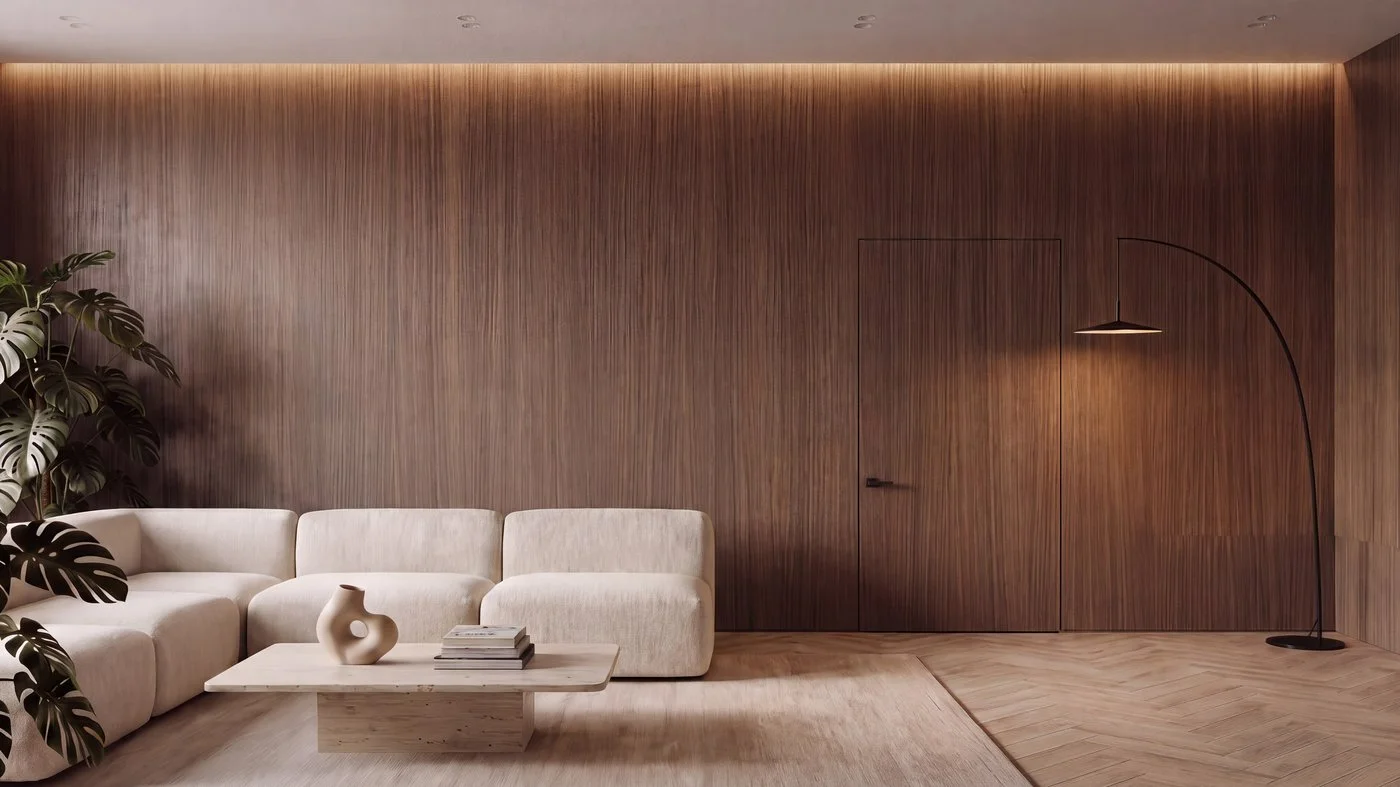
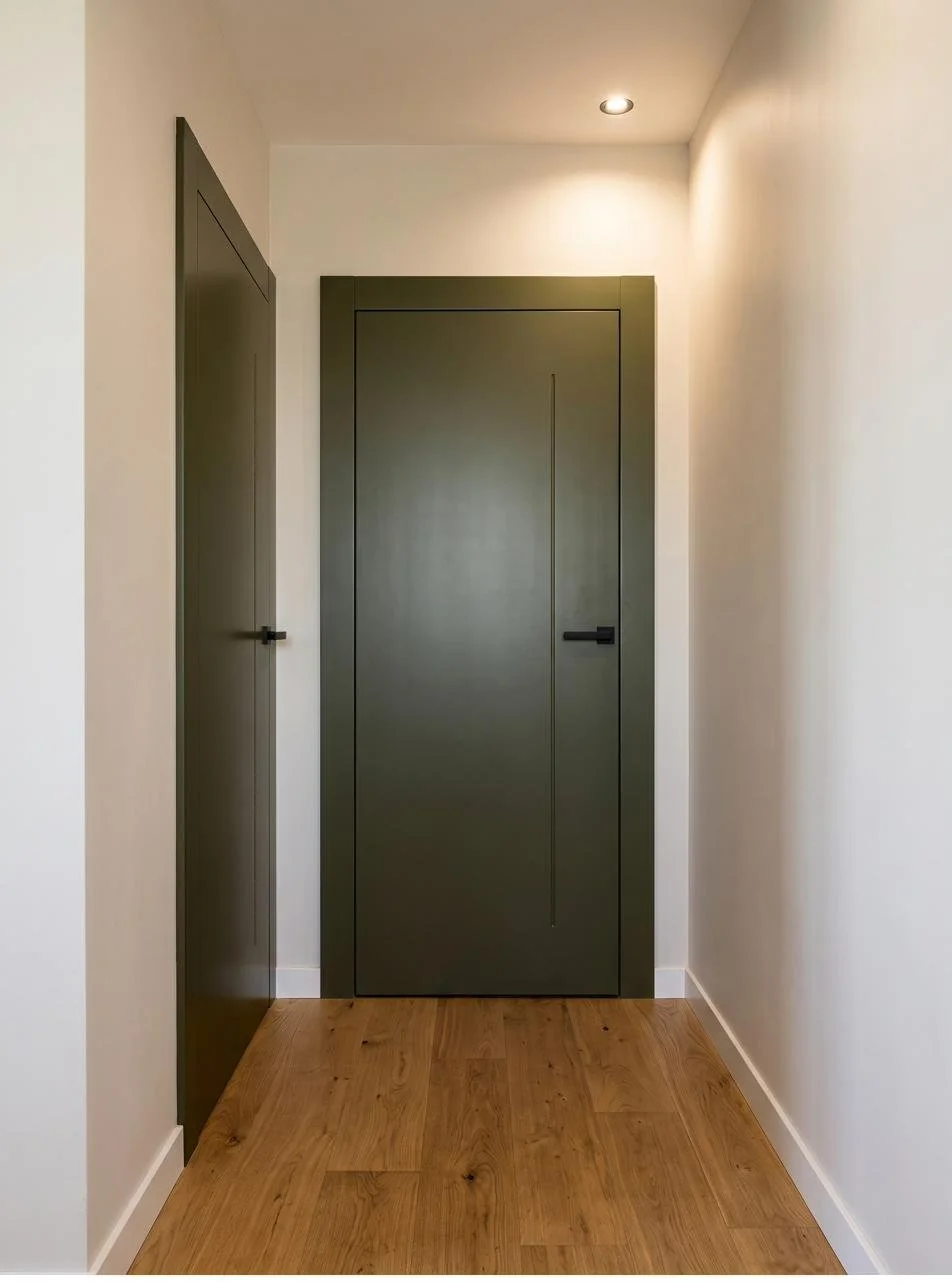
A uniform, smooth surface in almost any colour from the RAL and NCS ranges. Minimal and easily cared for — valued particularly where a door sits flush with the wall.
Popular in contemporary interiors and where doors sit flush with the wall.
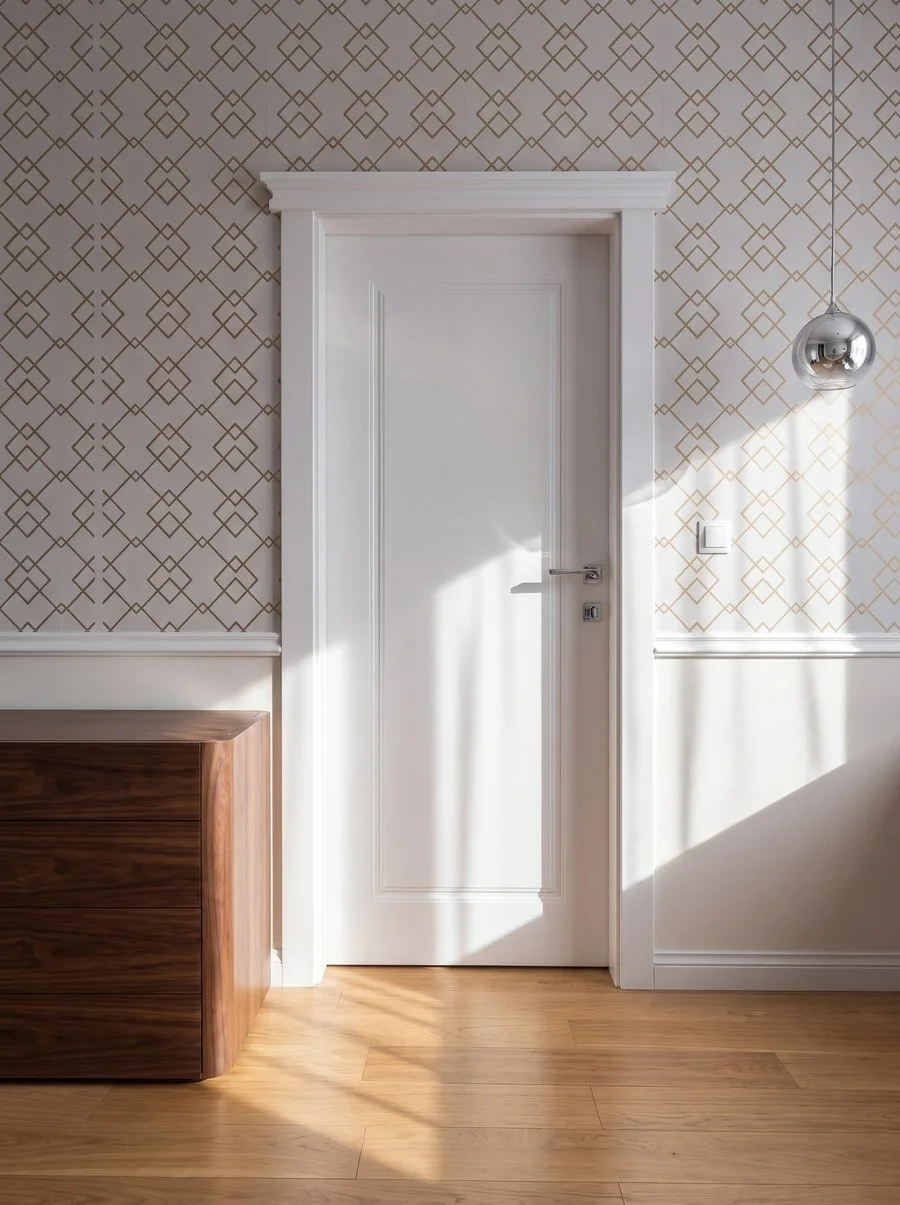
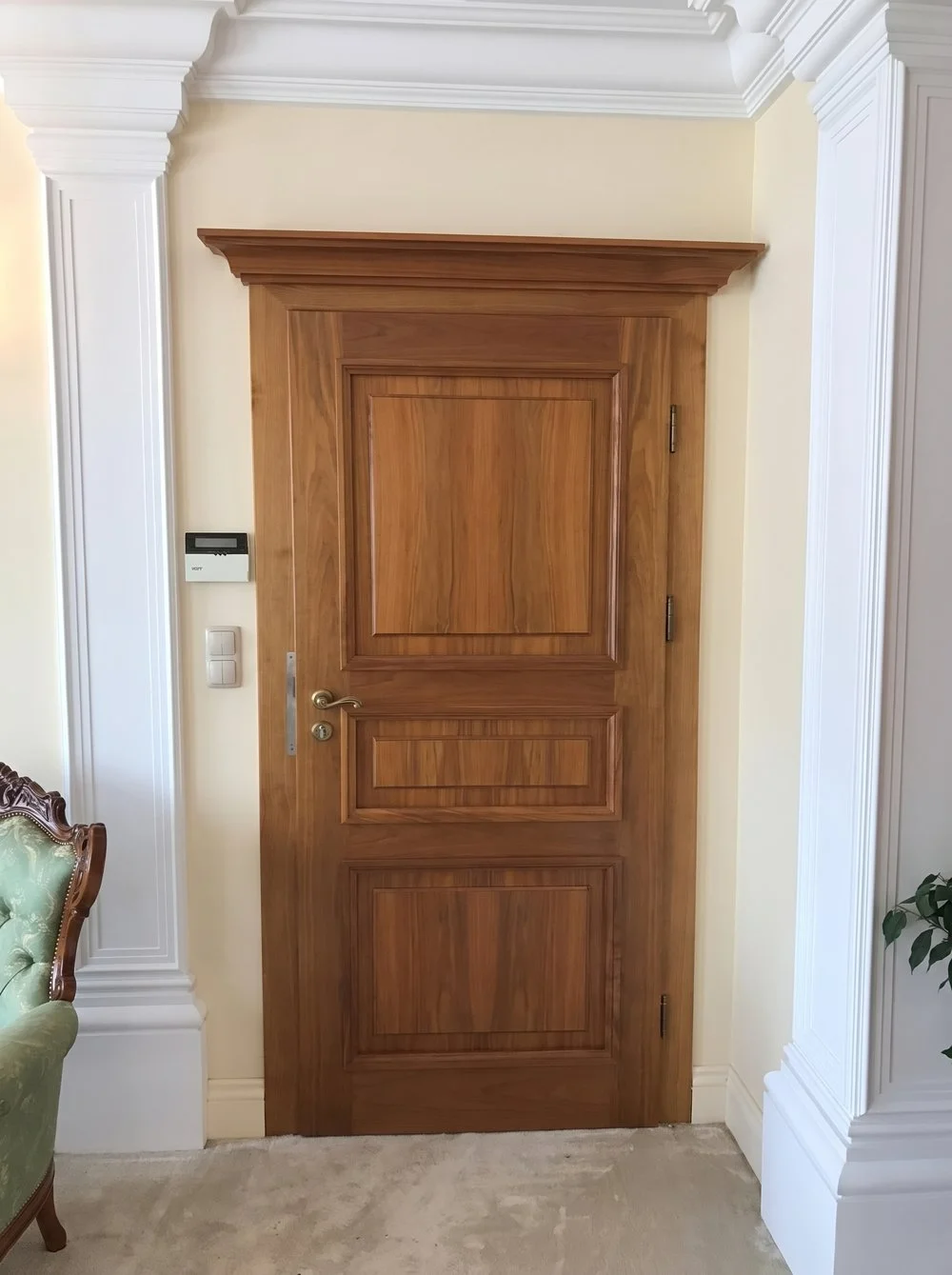
Solid timber doors have a long tradition in joinery and most often take a panelled construction, characteristic of classical and period interiors. It is a natural material — and therefore a living one.
Solid timber answers to changes in humidity and temperature, altering its dimensions slightly. This can cause seasonal movement in the leaf, a need for periodic adjustment of the hinges, and greater sensitivity to conditions in the room. Modern construction limits this with stabilising elements — tension rods set within the leaf, for instance. Old-growth timber also improves stability, though it is ever harder to obtain, and costly.
A choice of standing, beauty and craft — though not always the most dimensionally stable beside modern leaf constructions.
From the design point of view, the finish of a door is not a detail but an element of the interior's architecture. Architects value that our finishes — from veneers to lacquers — are predictable in quality and appearance, so that the doors do not compete with the interior but order it.
In contemporary interior architecture, doors ever more often cease to be separate objects and become a passage of the wall. With concealed-door systems, the very material found on the wall may be applied to the leaf — so that the border between them disappears.
On the face of a concealed door one may use, among others:
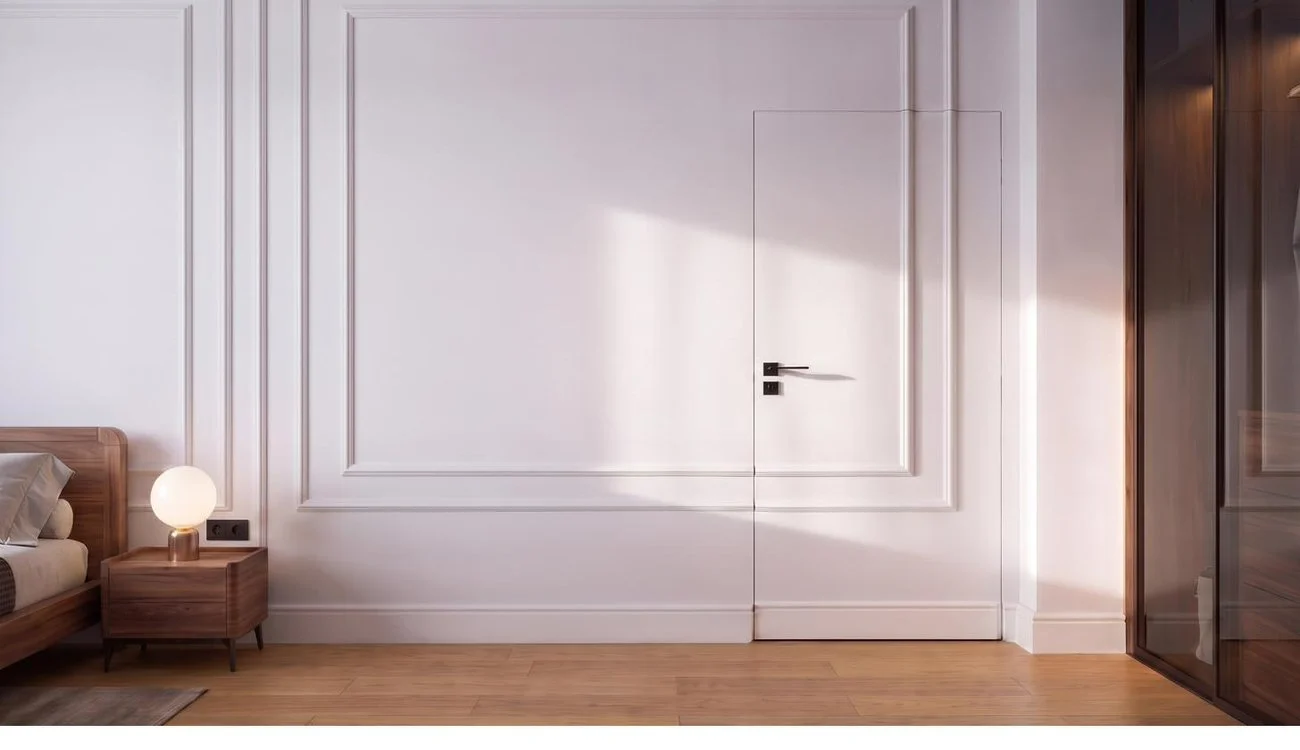
The simplest route to the “vanishing door” calls for no precious facing. A leaf in a concealed frame is painted in the same wall paint as the wall — the same colour, the same degree of sheen. The border between door and wall vanishes.
The same effect is given by wallpaper led from the wall onto the leaf. The economy here comes from the simplicity of the finish, not from the construction.
A clean, minimal choice — when what matters is the plane itself, not the material.
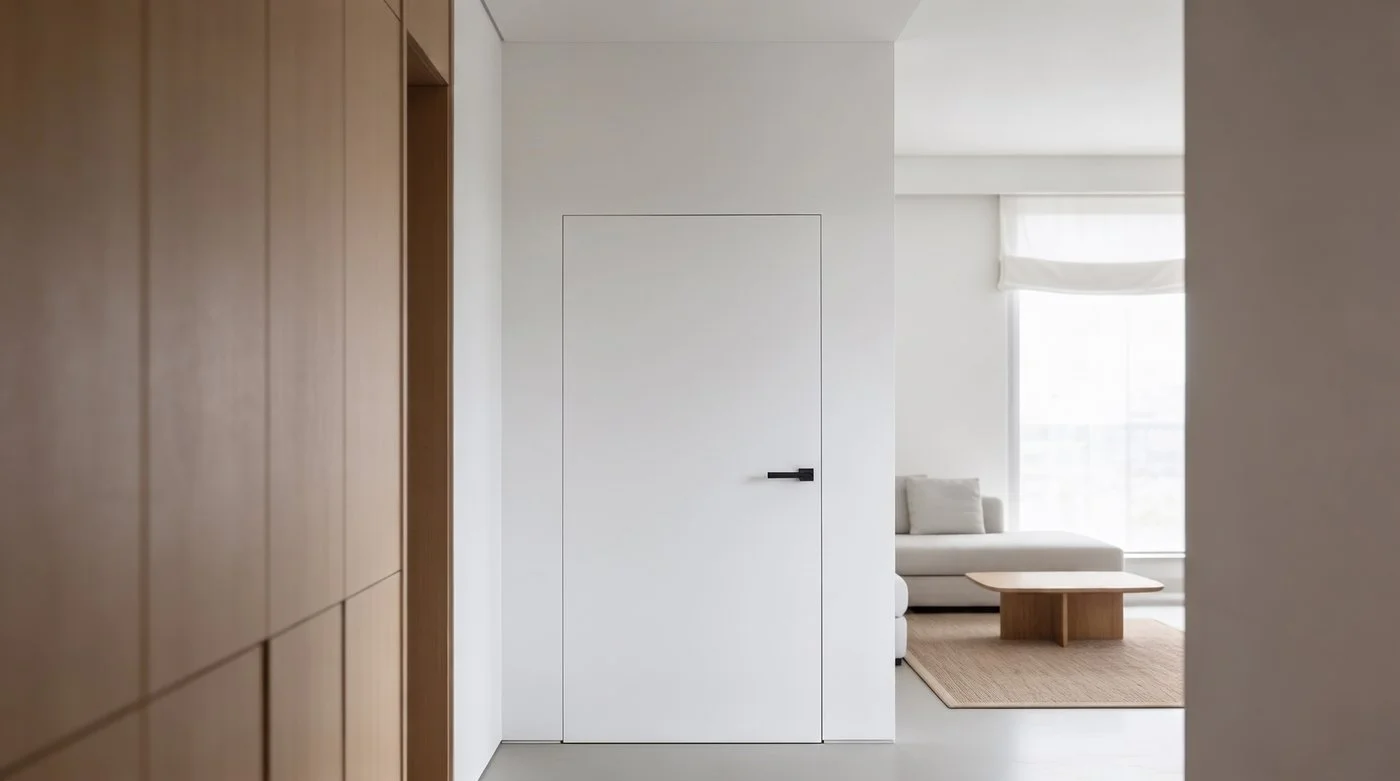
Synthetic surfaces of high mechanical resilience. Where a door works hard and must bear much, laminate wins on endurance.
It serves in heavily used spaces.
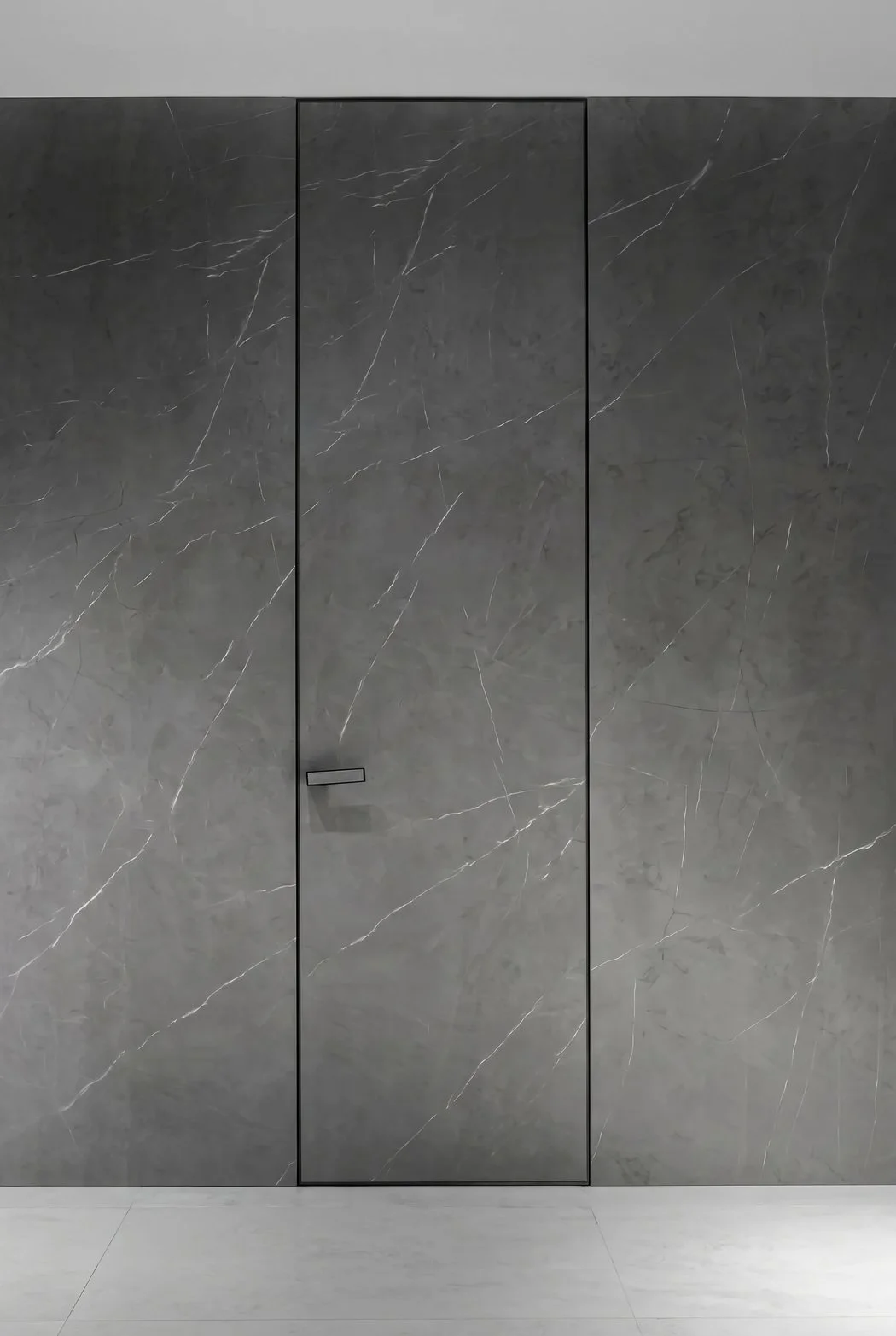
Soft textile panels applied to door and wall — the leaf disappears into one padded plane. The material absorbs sound and changes the way an interior sounds.
A solution for bedrooms, studies and interiors in which silence matters.
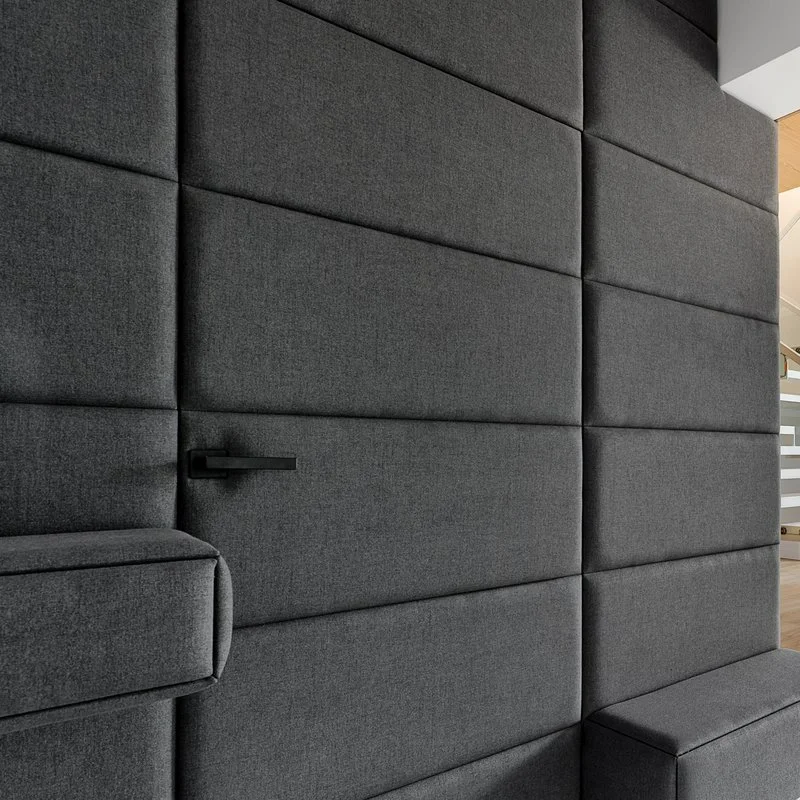
A leaf faced with mirror glass — the door disappears entirely and the wall gains depth. Graphite or bronze mirror works more quietly than silver and does not break up an interior.
A choice for narrow halls and hallways without a window.
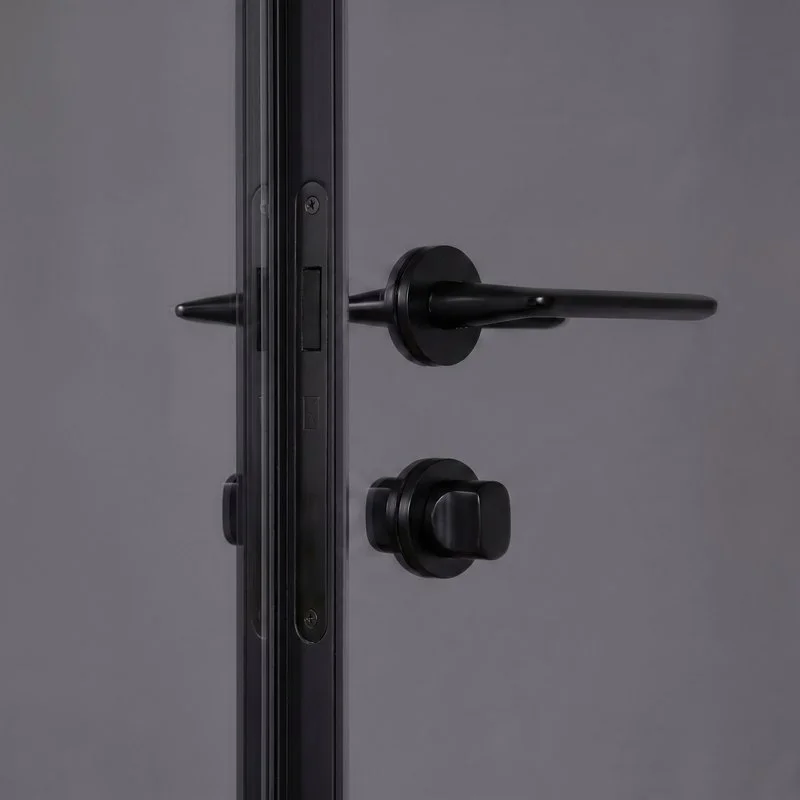
Veneer led from the wall onto the leaf gives what no coating can: one structure of timber across the whole plane. Engineered veneer holds the same figure and colour on every element of the joinery.
The most coherent solution where a door is part of a larger wall.
The most advanced solution is the integrated wall system, in which doors, wardrobe fronts and panelling form one coherent surface. The result is a smooth wall — finished in timber, lacquer, wallpaper, stone or tile — where doors and fronts remain all but invisible and the space keeps a minimal, ordered character.
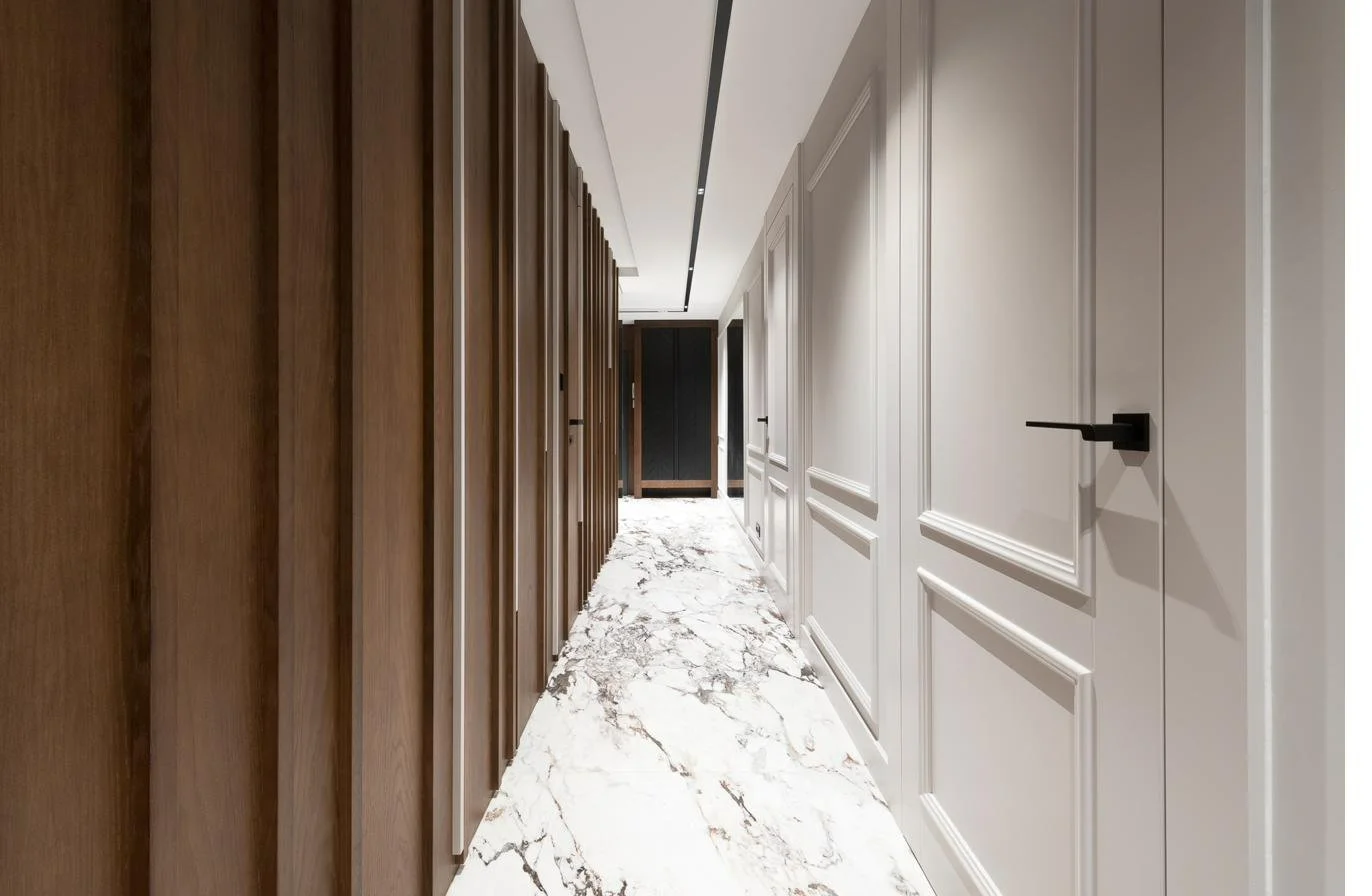
There is no one universal solution. The best choice depends on the style of the interior, the intensity of use and the endurance expected. The three most common directions:
Clients often say to us plainly: “We were afraid the doors would lose their effect after a year.” Yet after two to five years of use the finish is still among the strongest points in their judgement — the doors look of a piece with the interior and do not age visually.
Natural veneer or opaque lacquer — for character and elegance.
CPL / HPL laminates — where resilience and easy care matter.
Concealed doors finished identically to the wall — when the door is to disappear.
The best finish depends on the style of the interior and the endurance expected of the material — there is no one universal solution.
Yes. The kind of finish has considerable bearing both on the price of a door and on its endurance.
Yes. In concealed-door systems, the very material found on the wall may be applied to the leaf.
From natural veneer, through lacquer and laminates, to doors that disappear into the wall — the finish is what we see and touch every day. Chosen with care, it ceases to be a surface and becomes part of the interior's architecture.
Further parts of the Creadoor compendium
When a wall becomes architecture — one continuous plane.
Read the article →The rebate, the rebateless leaf, the concealed frame and reversible doors.
Read the article →One rule that settles the direction in which a door opens.
Read the article →Send plans, photographs, or simply the idea. We will reply as soon as we have studied it.